
• Voice Agents for Hospitality Businesses

    Voice Agents for Hospitality Businesses

    In the rapidly evolving landscape of hospitality, voice agents are transforming how businesses interact with guests. These AI-powered solutions streamline communication, enhance customer service, and improve operational efficiency. This article delves into the various ways voice agents can revolutionize hotel answering services, automate guest inquiries, and ultimately elevate the guest experience. As hospitality businesses face increasing demands for quick and effective communication, the integration of voice agents offers a promising solution to meet these challenges. We will explore the key features of hospitality call center software, the benefits of automated booking calls, and the latest trends in voice agent adoption within the industry.

    How Do AI Voice Agents Improve Hotel Answering Services?

    AI voice agents significantly enhance hotel answering services by providing rapid and accurate responses to guest inquiries. These systems utilize advanced natural language processing to understand and respond to a wide range of questions, ensuring that guests receive timely assistance. The implementation of AI voice agents leads to improved response times, higher guest satisfaction, and increased operational efficiency. By automating routine inquiries, hotels can allocate human resources to more complex tasks, ultimately enhancing the overall guest experience.

    Automating Guest Inquiry Handling with AI Voice Agents

    Hotel receptionist utilizing AI voice agent for guest inquiries in a busy environment

    Automating guest inquiry handling with AI voice agents allows hotels to provide instant responses to common questions. This technology not only personalizes interactions but also integrates seamlessly with existing systems, ensuring that guests receive accurate information. By leveraging AI, hotels can manage a higher volume of inquiries without compromising service quality. This automation reduces the burden on staff, allowing them to focus on providing exceptional service to guests who require more personalized attention.

    Reducing Wait Times and Enhancing Guest Experience

    One of the primary benefits of AI voice agents is their ability to reduce wait times for guests. By providing instant responses to inquiries, these systems enhance the overall guest experience. Guests appreciate the convenience of receiving immediate assistance, which can lead to increased satisfaction and loyalty. Furthermore, the integration of voice agents with hotel management systems ensures that guests receive accurate and up-to-date information, further improving their experience.

    What Are the Key Features of Hospitality Call Center Software?

    Hospitality call center software is designed to meet the unique needs of the industry, offering several key features that enhance operational efficiency:

    1. 24/7 Availability: Ensures that guests can reach out at any time, improving accessibility.
    2. Natural Language Processing: Allows for more human-like interactions, making communication smoother.
    3. Appointment Scheduling: Streamlines the booking process, reducing the workload on staff.

    These features collectively contribute to a more efficient and effective communication strategy for hospitality businesses.

    Multi-Channel Communication and Integration with PMS

    Multi-channel communication is essential for modern hospitality businesses. AI voice agents can integrate with property management systems (PMS) to provide a seamless experience across various platforms. This integration enhances accessibility, improves response times, and allows for personalized interactions with guests. By utilizing multiple communication channels, hotels can ensure that guests receive consistent and accurate information, regardless of how they choose to reach out.

    Real-Time Analytics and Performance Monitoring with FlowSight

    Real-time analytics and performance monitoring are crucial for optimizing hotel operations. With tools like FlowSight, hotels can track call metrics, response rates, and booking conversions. This data-driven approach enables businesses to identify areas for improvement and make informed decisions to enhance service quality. By leveraging analytics, hotels can continuously refine their processes and ensure that they meet guest expectations effectively.

    How Do Automated Booking Calls Streamline Hotel Operations?

    Automated booking calls streamline hotel operations by simplifying the reservation process. AI voice agents can handle booking inquiries, confirm reservations, and provide guests with essential information without human intervention. This efficiency not only reduces operational costs but also enhances the guest experience by providing quick and accurate responses. As a result, hotels can manage their resources more effectively while ensuring that guests receive the assistance they need.

    Virtual Receptionist Capabilities for Booking and Reservation Management

    Virtual receptionists equipped with AI capabilities can manage bookings and reservations efficiently. These systems operate 24/7, ensuring that guests can make inquiries and reservations at any time. By automating these processes, hotels can reduce the workload on their staff and improve overall service quality. The use of natural language processing allows virtual receptionists to engage with guests in a more personalized manner, enhancing the overall experience.

    Why Choose Virtual Receptionist Solutions for Hotels?

    Virtual receptionist interface in a hotel setting showcasing modern technology

    Choosing virtual receptionist solutions offers several advantages for hotels:

    1. Cost-Effectiveness: Reduces the need for additional staff, lowering operational costs.
    2. Improved Customer Service: Provides instant responses to guest inquiries, enhancing satisfaction.
    3. Operational Efficiency: Frees up staff to focus on more complex tasks, improving overall service quality.

    These benefits make virtual receptionist solutions an attractive option for hospitality businesses looking to enhance their operations.

    Improving Guest Communication Solutions with AI Voice Agents

    AI voice agents significantly improve guest communication solutions by providing a reliable and efficient means of interaction. These systems can handle a wide range of inquiries, from booking confirmations to general information about hotel amenities. By automating these processes, hotels can ensure that guests receive timely and accurate information, leading to a more satisfying experience. The ability to provide 24/7 support further enhances the value of AI voice agents in the hospitality sector.

    Case Studies Demonstrating ROI and Efficiency Gains

    Numerous case studies highlight the return on investment (ROI) and efficiency gains achieved through the implementation of AI voice agents in hospitality. For instance, hotels that have adopted these technologies report significant reductions in call handling times and increased guest satisfaction scores. By automating routine inquiries, these establishments can allocate resources more effectively, leading to improved operational efficiency and enhanced guest experiences.

    How Does Integration with Hotel Property Management Systems Enhance Voice Agent Performance?

    Integrating AI voice agents with hotel property management systems (PMS) enhances their performance by enabling real-time data access. This integration allows voice agents to provide accurate information regarding room availability, pricing, and booking status. As a result, guests receive timely and relevant responses, improving their overall experience. The seamless data exchange between voice agents and PMS ensures that hotels can maintain high service standards while optimizing their operations.

    Seamless Data Exchange Between Voice Agents and PMS

    Seamless data exchange between voice agents and PMS is crucial for maintaining operational efficiency. This integration allows for real-time updates on bookings, cancellations, and guest inquiries. By ensuring that voice agents have access to the latest information, hotels can provide accurate responses to guests, reducing the likelihood of errors and enhancing satisfaction. This streamlined communication process is essential for modern hospitality businesses.

    Impact on Booking Accuracy and Guest Satisfaction

    The integration of AI voice agents with PMS has a direct impact on booking accuracy and guest satisfaction. By providing real-time information, these systems minimize the risk of overbookings and ensure that guests receive the correct details regarding their reservations. This accuracy not only enhances the guest experience but also builds trust in the hotel’s services, leading to increased loyalty and repeat business.

    What Are the Latest Trends and Market Insights in Hospitality Voice Agent Adoption?

    The adoption of voice agents in the hospitality industry is on the rise, driven by the need for improved customer service and operational efficiency. Recent trends indicate a growing demand for omnichannel solutions that integrate various communication platforms. As hotels seek to enhance their service offerings, the implementation of AI voice agents is becoming increasingly common. This trend reflects a broader shift towards automation and technology-driven solutions in the hospitality sector.

    AI Adoption Growth and Demand for Omnichannel Solutions

    AI adoption in hospitality is growing rapidly, with many businesses recognizing the benefits of integrating voice agents into their operations. The demand for omnichannel solutions is particularly strong, as guests expect seamless communication across various platforms. By leveraging AI technology, hotels can meet these expectations and provide a more cohesive experience for their guests.

    Future Outlook for Voice Agent Technologies in Hospitality

    The future of voice agent technologies in hospitality looks promising, with continued advancements in AI and natural language processing. As these technologies evolve, hotels will be able to offer even more personalized and efficient services to their guests. The ongoing development of voice agents will likely lead to increased adoption across the industry, further enhancing the guest experience and operational efficiency.

    Despite the promising outlook for broader adoption, some specific applications, like in-room voice assistants, still face challenges in widespread deployment.

    In-Room Voice AI: Transforming Hotel Services & Guest Experience

    Voice-based artificial intelligence (AI) devices transform human-computer bidirectional interactions with new touchpoints. Despite the recent release of purpose-developed in-room voice assistants for hotels, they have not been widely deployed by hospitality companies. There is limited research on the phenomenon of voice-based digital assistants and a research gap in their adoption by hotels for automating workflows and enhancing guests’ experiences.

    In-room voice-based AI digital assistants transforming on-site hotel services and guests’ experiences, D Buhalis, 2021

    How Can Hotels Monitor and Optimize Voice Agent Performance?

    Monitoring and optimizing voice agent performance is essential for ensuring that these systems deliver the desired results. Hotels can utilize analytics tools to track key performance indicators (KPIs) such as call resolution rates, customer satisfaction scores, and response times. By analyzing this data, businesses can identify areas for improvement and implement strategies to enhance the effectiveness of their voice agents.

    Using FlowSight Analytics for Guest Inquiry Metrics

    FlowSight analytics provides valuable insights into guest inquiry metrics, allowing hotels to assess the performance of their voice agents. By tracking call volumes, response rates, and booking conversions, hotels can gain a comprehensive understanding of how well their systems are functioning. This data-driven approach enables businesses to make informed decisions regarding their voice agent strategies and optimize their operations accordingly.

    Key Performance Indicators and Continuous Improvement Strategies

    Establishing key performance indicators (KPIs) is crucial for monitoring the effectiveness of voice agents. Hotels should focus on metrics such as call resolution rates, customer satisfaction scores, and response times to evaluate performance. By continuously analyzing these indicators, businesses can identify trends and implement improvement strategies to enhance the overall guest experience.

    What Are the Pricing Models and Scalability Options for Hospitality Voice Agents?

    Pricing models and scalability options for hospitality voice agents vary depending on the provider and the specific features offered. Many companies offer flexible plans that cater to hotels of different sizes, allowing businesses to choose a solution that best fits their needs. Understanding these options is essential for hotels looking to implement voice agent technology effectively.

    Comparing Service Tiers and Pricing Structures

    When evaluating voice agent solutions, hotels should compare service tiers and pricing structures to determine the best fit for their operations. Different providers may offer varying levels of service, from basic inquiry handling to advanced features such as analytics and integration with PMS. By understanding these differences, hotels can make informed decisions regarding their voice agent investments.

    Flexible Plans for Hotels of Different Sizes

    Flexible pricing plans are essential for accommodating hotels of various sizes. Many providers offer scalable solutions that can grow with the business, ensuring that hotels can adapt their voice agent capabilities as their needs change. This flexibility allows hotels to invest in technology that aligns with their operational goals and enhances their service offerings.
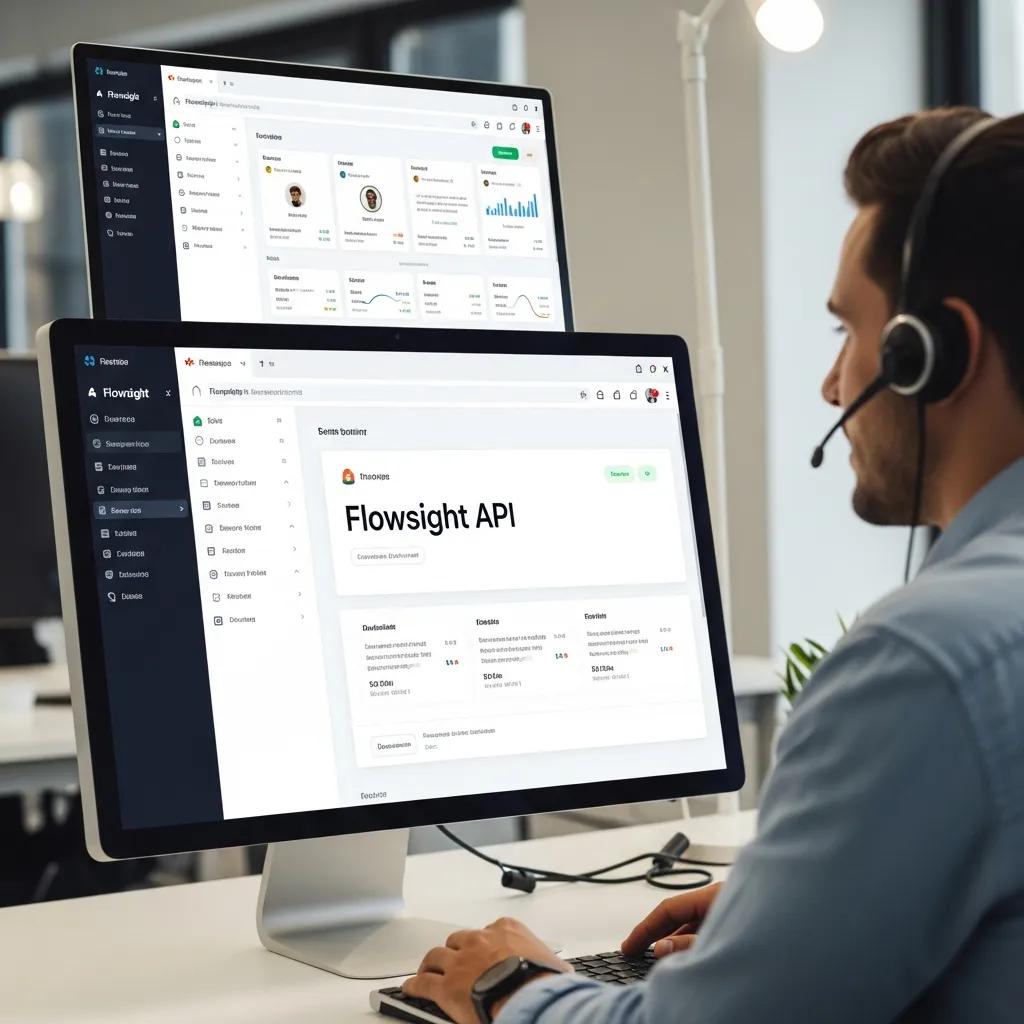
  • Flowsight API & Integrations

    Flowsight API & Integrations: Comprehensive Guide to Voice Agent and CRM Automation

    The Flowsight API is a powerful tool designed to enhance the capabilities of voice agents and streamline CRM automation. This comprehensive guide will delve into the functionalities of the Flowsight platform, its integration with CRM systems, and the benefits it offers to businesses. As organizations increasingly seek to improve customer engagement and operational efficiency, understanding how the Flowsight API can facilitate these goals is essential. This article will cover the overview of Flowsight, key functionalities of the voice agent, integration processes with CRM systems, and the overall benefits of using Flowsight. By the end, readers will have a clear understanding of how to leverage this technology for enhanced customer interactions.

    Overview of Flowsight

    Flowsight is an advanced platform that integrates voice agents with various communication channels, enabling businesses to automate customer interactions effectively. By utilizing AI technology, Flowsight enhances the customer service experience through natural language processing and real-time data analytics. This integration allows for seamless communication between voice agents and CRM systems, ensuring that customer inquiries are handled efficiently and accurately. The platform’s capabilities not only improve response times but also enhance the overall customer experience, making it a valuable asset for businesses looking to optimize their operations.

    The broader impact of such AI-powered virtual agents on Customer Relationship Management and service automation is widely recognized as transformative.

    AI Virtual Agents: Transforming CRM & Service Automation

    This article examines the transformative impact of AI-powered virtual agents on Customer Relationship Management systems. It explores how these sophisticated software entities are fundamentally redefining customer interactions and service automation across industries. It details how virtual agents enhance omnichannel engagement, enable intelligent self-service, and deliver proactive assistance that anticipates customer needs. Beyond basic task automation, these systems manage complex processes, optimize service delivery through intelligent routing, and contribute to organizational learning through operational intelligence. The article analyzes implementation considerations including integration requirements, change management st

    AI-Powered Virtual Agents in CRM: Revolutionizing Customer Interaction and Service Automation, GRS Chowhan, 2025

    Key Functionalities of the Voice Agent

    Close-up of a voice agent device demonstrating natural interaction capabilities

    The voice agent within the Flowsight platform offers several key functionalities that enhance its effectiveness in customer interactions. These include:

    1. Natural Interaction Capabilities: The voice agent can understand and respond to customer inquiries in a conversational manner, making interactions feel more personal and engaging.
    2. Automated Responses: By utilizing predefined scripts and AI-driven responses, the voice agent can handle common customer queries without human intervention, freeing up staff for more complex issues.
    3. Real-Time Data Processing: The voice agent can access and process customer data in real-time, allowing for personalized interactions based on the customer’s history and preferences.

    These functionalities collectively contribute to a more efficient customer service process, reducing wait times and improving satisfaction.

    Further research highlights the critical role of advanced AI techniques like natural language processing and reinforcement learning in achieving sophisticated, human-like interactions in automated customer service.

    NLP & RL for Advanced Customer Service Automation

    This research paper explores the integration of natural language processing (NLP) and reinforcement learning (RL) algorithms to enhance customer service automation, addressing the demand for more sophisticated and human-like interactions in automated systems. The study begins by reviewing current customer service technologies and identifying limitations in handling complex queries and adapting to diverse customer needs. It then proposes a novel framework that combines NLP for understanding and generating natural language and RL for dynamically improving the system’s performance through feedback and experience. The framework is designed to improve both response accuracy and user satisfaction by learning from interactions in real time. An experimental setup is developed, implementing the proposed approach using a dataset of customer interactions from a leading service provider. The system’s performance is evaluated against traditional rule-based and machine learning models using

    Enhancing customer service automation with natural language processing and reinforcement learning algorithms, 2020

    Integration with CRM Systems

    Illustration of the integration process between Flowsight API and CRM systems

    Integrating the Flowsight API with CRM systems is a straightforward process that enhances data management and customer relationship strategies. The integration allows for seamless data synchronization between the voice agent and the CRM, ensuring that all customer interactions are logged and accessible. This capability enables businesses to maintain a comprehensive view of customer interactions, which is crucial for effective follow-up and relationship building.

    Seamless Integration Process

    The integration process typically involves the following steps:

    1. API Configuration: Setting up the Flowsight API within the CRM system to enable data exchange.
    2. Data Mapping: Aligning data fields between the voice agent and the CRM to ensure accurate information transfer.
    3. Testing and Validation: Conducting tests to ensure that the integration functions correctly and that data is synchronized as expected.

    Benefits of Integration

    Integrating Flowsight with CRM systems offers several advantages:

    • Improved Data Management: Centralized data storage allows for better tracking of customer interactions and preferences.
    • Enhanced Customer Insights: Access to comprehensive customer data enables more informed decision-making and personalized service.
    • Increased Efficiency: Automation of data entry and retrieval processes reduces manual workload and minimizes errors.

    Indeed, the evolution of CRM systems towards intelligent, AI-assisted platforms is fundamentally reshaping how organizations manage sales, service, and support operations.

    AI-Assisted CRM: Enhancing Sales, Service & Support

    Customer Relationship Management (CRM) systems are evolving from rule-based workflow engines into intelligent, autonomous platforms powered by Artificial Intelligence (AI). AI-assisted CRM agents represent a transformative shift in how organizations manage sales, service, and support operations by enabling real-time decision-making, contextual automation, and personalized customer engagement at scale. These agents leverage machine learning, natural language processing (NLP), and predictive analytics to augment human agents rather than replace them, improving operational efficiency, customer satisfaction, and revenue outcomes.

    AI-Assisted CRM Agents for Sales, Service, and

    Support Operations, GK Sangam, 2026

    Benefits of Using Flowsight

    Utilizing the Flowsight API provides numerous benefits for businesses looking to enhance their customer engagement strategies. Some of the key advantages include:

    1. Enhanced Customer Experience: By automating responses and providing personalized interactions, businesses can significantly improve customer satisfaction.
    2. Cost-Effectiveness: Automating routine inquiries reduces the need for extensive customer service teams, leading to lower operational costs.
    3. Scalability: The Flowsight platform can easily scale to accommodate growing customer bases and increasing interaction volumes without compromising service quality.

    Comparison of Benefits

    To illustrate the various benefits of using Flowsight, the following table summarizes key advantages:

    BenefitDescriptionImpact Level
    Enhanced Customer ExperienceImproved interaction quality through automation and personalizationHigh
    Cost-EffectivenessReduction in operational costs due to automationMedium
    ScalabilityAbility to handle increased customer interactions without additional resourcesHigh

    This comparison highlights how Flowsight can transform customer service operations, making it a strategic choice for businesses aiming to enhance their engagement efforts.

    Conclusion

    In summary, the Flowsight API offers a robust solution for integrating voice agents with CRM systems, providing businesses with the tools needed to improve customer interactions and operational efficiency. By leveraging the capabilities of Flowsight, organizations can enhance their customer service experience, reduce costs, and scale their operations effectively. As the demand for efficient customer engagement continues to grow, adopting technologies like Flowsight will be crucial for staying competitive in the market.

  • Flowsight: Build Custom Agent Flows with Agentic AI

    Flowsight: Agentic AI Platform Overview

    In the rapidly evolving landscape of artificial intelligence, Flowsight emerges as a groundbreaking agentic AI platform developed by Scotsphere AI. This innovative platform empowers users to build, deploy, and manage autonomous AI agents that streamline complex workflows. As organizations increasingly seek efficiency and automation, understanding the capabilities and applications of Flowsight becomes essential. This article delves into the core functionalities of Flowsight, its practical applications in workflow automation, and the unique benefits it offers to businesses. By exploring these aspects, readers will gain insights into how Flowsight can transform operational processes and enhance productivity.

    Capabilities of Flowsight

    Flowsight boasts a range of capabilities that position it as a leader in the agentic AI space. At its core, the platform supports the development of multi-agent systems that can operate independently or in coordination with one another. This flexibility allows organizations to tailor their AI solutions to specific needs, enhancing overall efficiency. Additionally, Flowsight offers seamless integration with existing systems, ensuring that businesses can adopt AI without overhauling their current infrastructure.

    Real-time analytics is another critical feature, providing users with actionable insights that drive decision-making. Customizable workflows enable organizations to design processes that align with their unique operational requirements. Finally, the scalability of Flowsight ensures that as businesses grow, their AI capabilities can expand accordingly, making it a future-proof solution.

    Applications in Workflow Automation

    Business professional managing automated workflows with a tablet

    The practical applications of Flowsight in workflow automation are vast and varied. Organizations can leverage this platform to enhance customer interaction management, streamline appointment scheduling, and optimize data processing and document management. By automating these processes, businesses can achieve significant cost efficiency and improve the overall customer experience.

    1. Customer Interaction Management: Flowsight enables businesses to automate responses to customer inquiries, ensuring timely and accurate communication.
    2. Appointment Scheduling: The platform can manage scheduling tasks, reducing the administrative burden on staff and minimizing scheduling conflicts.
    3. Data Processing and Document Management: Flowsight automates the handling of documents and data, allowing for faster processing times and reduced errors.

    These applications illustrate how Flowsight can transform traditional workflows into efficient, automated processes that enhance productivity and customer satisfaction.

    Conclusion

    The significance of Flowsight in the realm of agentic AI cannot be overstated. As businesses increasingly adopt AI technologies, the enhancements in workflow automation provided by Flowsight will play a crucial role in improving customer interactions and operational efficiency. By integrating autonomous AI agents into their processes, organizations can not only streamline operations but also position themselves for future growth in an increasingly competitive landscape.

    What is Flowsight and How Does It Enable Autonomous AI Systems?

    Flowsight is an advanced agentic AI platform designed to facilitate the creation and management of autonomous AI systems. By integrating communication capabilities, Flowsight allows these systems to interact seamlessly with users and other agents. Automated responses to inquiries and customizable workflows are key features that enhance user experience and operational efficiency. Furthermore, the platform leverages real-time data and analytics to provide AI-driven insights that inform decision-making processes.

    Key Features and Functionalities:

    Flowsight’s key features include:

    • Integrated Communication: Facilitates seamless interaction between agents and users.
    • Automated Responses: Ensures timely and accurate communication without human intervention.
    • Customizable Workflows: Allows organizations to tailor processes to their specific needs.

    These functionalities empower businesses to deploy AI solutions that are not only effective but also adaptable to changing requirements.

    Use Cases:

    The versatility of Flowsight is evident in its various use cases, including:

    • Customer Service Automation: Enhances customer engagement by automating responses to common inquiries.

    The transformative potential of agentic AI in customer service is further underscored by specialized studies on its application.

    Agentic AI for Customer Service Automation

    Agentic Artificial Intelligence systems represent a transformative evolution in customer service automation, moving beyond traditional rule-based architectures toward autonomous, reasoning-capable agents that demonstrate emergent behaviors through foundation model integration. This technical review evaluates the conceptual foundations, architectural frameworks, and practical implementations of agentic systems across customer service environments.

    Agentic AI for Customer Service and Contact Center Solutions, 2025
    • Enhanced Customer Engagement: Provides personalized interactions based on user data and preferences.
    • Industry Versatility: Applicable across various sectors, from healthcare to finance, demonstrating its broad utility.

    These use cases highlight the platform’s ability to cater to diverse business needs, making it a valuable asset for organizations seeking to leverage AI.

    Benefits of Flowsight:

    Utilizing Flowsight offers several key benefits:

    • Improved Customer Satisfaction: Automated interactions lead to quicker response times and enhanced service quality.
    • Operational Efficiency: Streamlined processes reduce the time and resources required for task completion.
    • Scalability: As businesses grow, Flowsight can easily adapt to increased demands without compromising performance.

    These benefits underscore the transformative potential of Flowsight in modern business environments.

    Understanding Agentic AI and Intelligent Agent Software Concepts

    Agentic AI refers to systems that can operate autonomously, making decisions and taking actions based on their programming and learned experiences. Intelligent agent software encompasses the technologies that enable these systems to function effectively. The benefits of multi-agent systems include improved efficiency, enhanced problem-solving capabilities, and the ability to handle complex tasks that would be challenging for human operators alone.

    Further research elaborates on the foundational shift towards this paradigm, highlighting its technological underpinnings and broader implications.

    Agentic AI Paradigm: Technologies, Applications & Challenges

    Artificial intelligence (AI) is progressing toward the Agentic AI paradigm, which involves intelligent systems capable of autonomous, proactive, and goal-focused behavior through adaptive interactions with their environment. This article provides a critical review of the development of Agentic AI, examining its technological foundations, application areas, and the associated technical, ethical, and policy challenges.

    A Critical Review of Agentic AI: Core Technologies, Applications, Ethical Implications, and

    Future Research Directions, S Goyal, 2025

    Key Features of the Flowsight Agent Builder Platform

    User designing an AI agent using the Flowsight Agent Builder interface

    The Flowsight Agent Builder platform is designed to simplify the development of AI agents. Key features include:

    • Multi-Agent System: Supports the creation of multiple agents that can work independently or collaboratively.
    • Integration Capabilities: Easily integrates with existing business systems to enhance functionality.
    • Customizable Workflows: Allows users to design workflows that meet their specific operational needs.

    These features make the Flowsight Agent Builder a powerful tool for organizations looking to implement AI solutions.

    How Does Flowsight Facilitate AI Agent Development and Multi-Agent Coordination?

    Flowsight facilitates AI agent development through its user-friendly interface and robust tools. The platform supports the creation of specialized agents tailored to specific tasks, ensuring that each agent can perform optimally. Additionally, Flowsight’s integration capabilities allow for seamless coordination between multiple agents, enhancing overall system efficiency.

    What Are the Use Cases and Benefits of AI Workflow Automation with Flowsight?

    AI workflow automation with Flowsight offers numerous use cases and benefits, including:

    • Enhanced Customer Interaction: Automates responses to customer inquiries, improving engagement.
    • Automated Pricing Calculations: Streamlines pricing processes, reducing errors and increasing efficiency.
    • Document Processing: Automates the handling of documents, leading to faster processing times.

    These use cases demonstrate how Flowsight can significantly improve operational efficiency and customer satisfaction.

    Enterprise Integration and Scalability of AI Automation

    Flowsight is designed for easy integration with existing enterprise systems, ensuring that businesses can adopt AI without significant disruptions. The platform’s scalability allows organizations to expand their AI capabilities as their needs evolve, making it a future-proof solution for businesses of all sizes.

    This approach aligns with the broader industry trend of adopting AI-first enterprise architectures and scalable cloud methodologies.

    AI-First Enterprise Architecture & Scalable Cloud Methodologies

    Contemporary businesses are progressively implementing an AI-centric product design approach, integrating machine learning (ML) intelligence into the foundation of new products and functionalities. This paper offers an extensive examination of scalable cloud architecture methodologies that facilitate swift prototyping, efficient model lifecycle management, and ongoing training to promote AI-driven innovation.

    AI-First Enterprise Architecture: Designing Intelligent Systems for a Global Scale, SK Parimi, 2022

    Unique Value Propositions and Differentiators of Flowsight

    Flowsight stands out in the market due to its unique value propositions, including:

    • Multi-Agent System: Offers the ability to deploy multiple agents that can operate independently or collaboratively.
    • Enterprise-Grade Orchestration: Provides robust tools for managing complex workflows and processes.
    • Accessibility for SMEs: Designed to be user-friendly, making it accessible for small and medium enterprises.

    These differentiators position Flowsight as a leading choice for organizations seeking to implement agentic AI solutions.

    What Are the Best Practices for Integrating and Scaling Flowsight in Enterprise Environments?

    To effectively integrate and scale Flowsight in enterprise environments, organizations should consider the following best practices:

    1. Integration Strategies: Develop a clear plan for integrating Flowsight with existing systems to minimize disruptions.
    2. Scaling Techniques: Implement strategies that allow for gradual scaling of AI capabilities as business needs grow.
    3. Monitoring Performance: Regularly assess the performance of AI agents to ensure they meet operational goals.

    These practices will help organizations maximize the benefits of Flowsight while minimizing potential challenges.

    What Are the Future Trends and Ethical Considerations in Agentic AI Platforms Like Flowsight?

    As agentic AI platforms like Flowsight continue to evolve, several future trends and ethical considerations emerge. Emerging developments in AI technology will likely enhance the capabilities of platforms, leading to more sophisticated and autonomous systems. Ethical AI deployment will become increasingly important, with a focus on ensuring that AI systems operate transparently and fairly. Additionally, industry growth projections indicate a significant increase in the adoption of AI technologies across various sectors.

    Overview of Flowsight Pricing and Service Offerings

    Flowsight offers a range of pricing plans to accommodate different business needs. The Explorer Plan provides essential features for small businesses, while the Business Plan includes advanced functionalities for growing organizations. For larger enterprises, the Enterprise Plan offers comprehensive solutions tailored to complex operational requirements.

    Accessing Tutorials, Documentation, and Customer Support

    Users can access a wealth of resources, including tutorials and documentation, to help them navigate the Flowsight platform. Customer support options are also available to assist users with any inquiries or technical issues they may encounter.

    Key Performance Indicators for Organic Traffic and Engagement

    To measure the effectiveness of Flowsight in driving organic traffic and engagement, organizations should focus on key performance indicators (KPIs) such as:

    • Organic Traffic Metrics: Track the number of visitors coming from organic search results.
    • Engagement Metrics: Monitor user interactions with AI agents to assess their effectiveness.
    • SEO Performance Indicators: Evaluate the impact of Flowsight on overall search engine optimization efforts.

    These KPIs will provide valuable insights into the performance of Flowsight and its contribution to business success.

  • Build Voice Agents Easily with Flowsight Agent Builder

    Flowsight Agent Builder & Custom Flows: Comprehensive Guide to Voice Agent Platform and AI Conversation Builder

    The Flowsight Agent Builder is a powerful tool designed to streamline the development of voice agents and enhance conversational AI capabilities. This comprehensive guide will delve into the functionalities of Flowsight, exploring how it empowers users to create custom voice workflows and interactive voice responses. As businesses increasingly seek to automate customer interactions, understanding the mechanisms behind Flowsight can provide significant advantages. This article will cover the key features of Flowsight, the process of building custom voice agent flows, integration options, analytics tools, and real-world applications that demonstrate its effectiveness. By the end, readers will gain insights into how Flowsight can transform their approach to AI agent development.

    What is Flowsight and How Does It Empower AI Agent Development?

    Flowsight is an advanced platform that facilitates the creation and management of voice agents, enabling businesses to automate customer interactions effectively. By leveraging AI technology, Flowsight empowers developers to design conversational agents that can understand and respond to user queries in a natural manner. This capability is crucial for enhancing customer engagement and streamlining workflows. The platform’s user-friendly interface and robust features make it an ideal choice for organizations looking to implement AI-driven solutions.

    Understanding Flowsight as a Voice Agent Platform and Conversational AI Builder

    As a voice agent platform, Flowsight offers a range of functionalities that cater to the needs of developers and businesses alike. It provides tools for building conversational AI that can handle various tasks, from simple inquiries to complex interactions. The platform’s architecture supports the integration of natural language processing (NLP) capabilities, allowing voice agents to comprehend and process user inputs effectively. This understanding is essential for creating seamless and engaging user experiences.

    Further research emphasizes the intricate components and considerations involved in developing robust conversational AI bot designer platforms, including NLP, context management, and API integration.

    Building Conversational AI Bot Designer Platforms

    This article explores the key components and considerations for building a conversation bot designer platform, using a flight booking use case as an example. We discuss the role of natural language processing, personalized bot responses, entity fulfillment, context management, API integration, code execution, rule-based routing, context switching, and reusable subjourneys in creating a robust and efficient conversational bot.

    Integrating conversational AI into cloud platforms: Methods and impact, ES Shekhar, 2023

    Key Features of Flowsight: Custom Voice Workflows and Interactive Voice Response Design

    Digital flowchart representing custom voice workflows in a tech-savvy environment, emphasizing AI and voice technology

    Flowsight boasts several key features that set it apart in the realm of voice automation software. These include:

    1. Custom Voice Workflows: Users can design tailored workflows that guide the interaction process, ensuring that voice agents respond appropriately to user needs.
    2. Interactive Voice Response (IVR) Design: Flowsight allows for the creation of sophisticated IVR systems that enhance user experience by providing clear and efficient navigation options.
    3. Drag-and-Drop Interface: The platform’s intuitive interface enables users to build and modify voice flows easily, reducing the time and effort required for development.

    Custom Voice Workflows

    Custom voice workflows are essential for creating personalized user experiences. By defining specific paths that a conversation can take, businesses can ensure that their voice agents provide relevant and accurate responses. This customization enhances user satisfaction and increases the likelihood of successful interactions.

    Interactive Voice Response Design

    The design of interactive voice response systems is crucial for guiding users through complex processes. Flowsight’s IVR design capabilities allow businesses to create systems that are not only functional but also user-friendly. This feature is particularly beneficial for customer service applications, where clear navigation can significantly improve user experience.

    How to Build Custom Voice Agent Flows Using Flowsight?

    Building custom voice agent flows with Flowsight involves a systematic approach that leverages the platform’s features. Users can start by defining the objectives of their voice agents, followed by mapping out the conversation paths. The drag-and-drop interface simplifies the process, allowing for quick adjustments and iterations.

    Step-by-Step Guide to Designing Custom Voice Workflows with Drag-and-Drop Tools

    To design effective custom voice workflows, follow these steps:

    1. Define Objectives: Clearly outline what you want your voice agent to achieve.
    2. Map Conversation Paths: Create a flowchart that represents the different paths a conversation can take.
    3. Utilize Drag-and-Drop Tools: Use Flowsight’s interface to build the workflow visually, adding responses and actions as needed.
    4. Test and Iterate: Conduct tests to ensure the workflow functions as intended, making adjustments based on user feedback.

    Best Practices for Interactive Voice Response Design in Flowsight

    When designing IVR systems in Flowsight, consider the following best practices:

    1. Keep Menus Simple: Limit the number of options presented to users to avoid confusion.
    2. Use Clear Language: Ensure that prompts are easy to understand and free of jargon.
    3. Provide Feedback: Let users know their inputs are being processed to enhance engagement.

    Which Communication Channels Can Flowsight Integrate With for AI Agent Deployment?

    Flowsight supports integration with various communication channels, making it a versatile solution for businesses. These channels include:

    • Voice Platforms: Such as telephony systems and smart speakers.
    • Messaging Apps: Including popular platforms like WhatsApp and Facebook Messenger.
    • Web Interfaces: Enabling voice interactions directly on websites.

    The strategic deployment of diverse AI agents across various communication channels, including text, voice, and visual processing, highlights the importance of robust routing logic for maximizing return on investment in customer service.

    AI Agent Routing for Multi-Modal Customer Service

    As enterprises deploy diverse AI agents for text, voice, and visual processing, investments in routing logic can have a higher ROI than investments in marginal

    Cost-Optimized Agentic AI Routing and Automation for Multi-Modal Customer Service Operations

    Popular Integration Options for Voice and Messaging Platforms

    Businesses can leverage Flowsight’s integration capabilities to connect with popular platforms, enhancing their reach and accessibility. Some notable options include:

    1. Twilio: For telephony integration.
    2. Slack: To facilitate internal communications.
    3. Facebook Messenger: For customer engagement through social media.

    How Flowsight Connects with External Systems and APIs

    Flowsight’s ability to connect with external systems and APIs is a significant advantage for businesses looking to enhance their voice agents’ capabilities. This integration allows for the retrieval of real-time data, enabling voice agents to provide up-to-date information to users. By utilizing APIs, businesses can create more dynamic and responsive voice interactions.

    What Analytics and Optimization Tools Does Flowsight Offer for AI Agents?

    Person reviewing analytics data on a tablet in a modern office, focusing on optimization tools for AI agents

    Analytics and optimization are critical for improving the performance of voice agents. Flowsight provides tools that allow businesses to track user interactions, analyze data, and optimize workflows. These insights can inform adjustments to voice agents, ensuring they meet user needs effectively.

    What Are the Use Cases and Success Stories Demonstrating Flowsight’s Impact?

    Flowsight has been successfully implemented across various industries, showcasing its versatility and effectiveness. Some notable use cases include:

    1. Customer Service Automation: Businesses have utilized Flowsight to automate customer inquiries, reducing response times and improving satisfaction.
    2. Appointment Scheduling: Voice agents built with Flowsight can handle appointment bookings, streamlining the process for both customers and businesses.
    3. Feedback Collection: Organizations have leveraged Flowsight to gather customer feedback through voice interactions, providing valuable insights for improvement.

    The integration of conversational AI systems is recognized for its potential to revolutionize customer service operations, enhancing efficiency, scalability, and overall customer experience.

    Integrating Conversational AI for Enhanced Customer Service

    Conversational AI (CAI). It has the potential to revolutionise customer service operations by enhancing enterprises’ efficiency and scalability while also improving customer experience. Adopting CAI systems into Enterprise Architecture (EA) presents a complex challenge, requiring enterprises to address technical, operational, and strategic aspects.

    The Integration of conversational AI system into enterprise architecture, 2003

    Case Studies Highlighting ROI from AI Voice Agent Automation

    Several case studies illustrate the return on investment (ROI) achieved through the use of Flowsight. For instance, a retail company reported a 30% increase in customer satisfaction after implementing a voice agent for order inquiries. Another case study highlighted a 25% reduction in operational costs due to the automation of routine tasks.

    Industry Applications of Flowsight in Customer Service and Workflow Automation

    Flowsight’s applications extend beyond customer service, impacting various industries. In healthcare, for example, voice agents can assist with patient inquiries and appointment scheduling, while in finance, they can provide account information and transaction updates. This versatility makes Flowsight a valuable tool for workflow automation across sectors.

    How Does Flowsight Compare to Other Conversational AI Development Tools?

    When comparing Flowsight to other conversational AI development tools, several factors come into play. Flowsight’s unique features, such as its drag-and-drop interface and robust integration capabilities, set it apart from competitors. Additionally, its focus on custom workflows allows businesses to tailor their voice agents to specific needs.

    Comparing Flowsight with Google Dialogflow, Amazon Lex, and Voiceflow

    In a direct comparison with tools like Google Dialogflow, Amazon Lex, and Voiceflow, Flowsight offers distinct advantages. While Dialogflow and Lex are powerful in their own right, Flowsight’s user-friendly design and emphasis on customization make it an attractive option for businesses seeking to create tailored voice experiences.

    Unique Advantages of Flowsight’s Custom Flow and Analytics Features

    Flowsight’s custom flow capabilities allow for a high degree of personalization, enabling businesses to create voice agents that align closely with their brand voice and customer expectations. Additionally, the platform’s analytics features provide actionable insights that can drive continuous improvement in voice interactions.

    What Are the Pricing Plans and Support Options for Flowsight Agent Builder?

    Flowsight offers various pricing plans to accommodate different business needs. These plans typically include options for basic access to advanced features, allowing organizations to choose a plan that aligns with their goals. Support options are also available, ensuring users have access to assistance when needed.

    Customer Support and Onboarding Services for AI Agent Development

    To facilitate a smooth onboarding process, Flowsight provides comprehensive customer support services. This includes training resources, documentation, and direct support from the Flowsight team. These services are designed to help businesses maximize the potential of their voice agents.

    How to Get Started with Flowsight: Implementation and Best Practices?

    Getting started with Flowsight involves a few key steps:

    1. Sign Up for an Account: Begin by creating an account on the Flowsight platform.
    2. Explore the Interface: Familiarize yourself with the drag-and-drop tools and features available.
    3. Start Building: Begin designing your custom voice workflows based on your business objectives.

    Setting Up Your First Custom Voice Agent Flow in Flowsight

    To set up your first custom voice agent flow, follow these steps:

    1. Define Your Goals: Determine what you want your voice agent to accomplish.
    2. Create a Workflow: Use the drag-and-drop interface to build your flow, incorporating various responses and actions.
    3. Test Your Flow: Conduct thorough testing to ensure the flow operates as intended.

    Tips for Maintaining and Updating AI Agents Using Flowsight

    Maintaining and updating AI agents is crucial for ensuring their effectiveness. Consider these tips:

    1. Regularly Review Analytics: Use Flowsight’s analytics tools to monitor performance and identify areas for improvement.
    2. Solicit User Feedback: Gather feedback from users to understand their experiences and make necessary adjustments.
    3. Stay Updated on Features: Keep abreast of new features and updates from Flowsight to leverage the latest capabilities.
  • Efficient Call Overflow Solutions for Peak Time Support

    Comprehensive Call Overflow & Peak-Time Handling Solutions for Optimized Customer Service

    In the fast-paced world of customer service, managing call overflow and peak-time handling is crucial for maintaining high levels of customer satisfaction. Businesses often face significant challenges during peak hours, leading to increased wait times and customer frustration. This article delves into the complexities of call overflow, exploring its impact on customer experience and the innovative solutions available to address these challenges. Readers will learn about the key factors contributing to call volume spikes, the role of AI in optimizing call management, and best practices for ensuring efficient service during busy periods. By understanding these dynamics, businesses can implement effective strategies to enhance their customer service operations.

    What Are the Key Challenges of Call Overflow During Peak Hours?

    Call overflow during peak hours presents several challenges for businesses. The most pressing issues include increased call volume, which can overwhelm staff and lead to longer wait times for customers. This situation often results in customer frustration, as individuals may feel neglected or undervalued when their calls are not answered promptly. Additionally, operational inefficiencies can arise, as resources become strained and the quality of service diminishes. These challenges necessitate effective strategies to manage call overflow and ensure that customer needs are met even during the busiest times.

    Research further emphasizes the importance of carefully designed overflow policies to maintain service levels and manage customer waiting times effectively.

    Optimizing Call Center Overflow Policies for Service Level

    AbstractWe examine how overflow policies in a multi-skill call center should be designed to accommodate performance measures that depend on waiting time percentiles such as service level. This is done using a discrete Markovian approximation of the waiting time of the first customers waiting in line. A Markov decision chain is used to determine the optimal policy. This policy outperforms considerably the ones used most often in practice, which use a fixed threshold. The present method can be used also for other call-center models and other situations where performance is based on actual waiting times and customers are treated in a FCFS order.

    Optimization of overflow policies in call centers, GM Koole, 2015

    How Does Call Overflow Impact Customer Experience and Wait Times?

    The impact of call overflow on customer experience is profound. Long wait times can lead to dissatisfaction, as customers may feel their time is not respected. This perception can damage a company’s reputation and result in lost business. Furthermore, operational strain on customer service representatives can lead to burnout, affecting their performance and the overall quality of service provided. Addressing these issues is essential for maintaining a positive customer experience and ensuring that businesses can effectively manage high call volumes.

    What Causes Increased Call Volumes During Peak-Time Periods?

    Several factors contribute to increased call volumes during peak-time periods. Seasonal demand often drives spikes in customer inquiries, particularly during holidays or promotional events. Additionally, unexpected incidents, such as product recalls or service outages, can lead to a sudden influx of calls. Understanding these causes allows businesses to prepare for peak times and implement strategies to manage the increased demand effectively.

    How Do AI-Powered Call Routing Solutions Improve Peak-Time Call Management?

    AI-powered call routing system optimizing customer service during peak hours

    AI-powered call routing solutions significantly enhance peak-time call management by utilizing advanced algorithms to direct calls to the most appropriate representatives. These systems leverage natural language processing to understand customer inquiries and provide 24/7 availability, ensuring that customers receive assistance whenever they need it. By automating call distribution, businesses can reduce wait times and improve overall efficiency, leading to a better customer experience. Scotsphere’s intelligent call routing is a prime example of how AI can transform call management during peak hours.

    What Are the Benefits of Automated Call Distribution in Overflow Handling?

    Automated call distribution technology managing high call volumes effectively

    Automated call distribution (ACD) offers numerous advantages in handling overflow situations. One of the primary benefits is efficient call routing, which ensures that calls are directed to the right agents based on their skills and availability. This capability is particularly valuable during high call volumes, as it helps manage the flow of inquiries and reduces the likelihood of customer frustration. Additionally, ACD systems can handle high call volumes seamlessly, allowing businesses to maintain service quality even during peak times. Ultimately, this technology leads to an improved customer experience and higher satisfaction rates.

    How Does Scotsphere’s AI-Driven Call Routing Enhance Scalability and Efficiency?

    Scotsphere’s AI-driven call routing enhances scalability and efficiency by providing instant call answering and automated appointment booking. This technology allows businesses to manage fluctuating call volumes without compromising service quality. Real-time analytics further support decision-making, enabling companies to adjust their strategies based on current demand. By implementing these solutions, businesses can ensure they are well-equipped to handle peak times effectively.

    What Techniques Are Used for Automated Overflow Call Handling?

    Several techniques are employed for automated overflow call handling. These include the use of AI voice agents, which can manage basic inquiries and free up human agents for more complex issues. Call forwarding systems also play a crucial role, directing calls to available representatives or alternative locations when demand exceeds capacity. Performance monitoring tools help businesses assess the effectiveness of their overflow handling strategies, ensuring continuous improvement.

    How Do IVR Overflow Strategies Reduce Call Abandonment?

    Interactive Voice Response (IVR) overflow strategies are instrumental in reducing call abandonment rates. By providing efficient call management options, such as self-service menus, customers can resolve their inquiries without waiting for a representative. This approach not only enhances customer satisfaction but also allows businesses to manage call volumes more effectively. Performance metrics from IVR systems can further inform strategies to improve service delivery.

    What Role Does Real-Time Call Queue Management Play in Overflow Solutions?

    Real-time call queue management is essential for effective overflow solutions. By monitoring call queues, businesses can address inquiries promptly and allocate resources where they are needed most. Automation benefits, such as notifying customers of their position in the queue, can enhance the overall experience. Operational efficiency is improved as businesses can respond to fluctuations in call volume dynamically.

    How Can Real-Time Analytics Optimize Call Center Performance During Peak Times?

    Real-time analytics play a critical role in optimizing call center performance during peak times. By monitoring call volume and response rates, businesses can identify trends and adjust their strategies accordingly. This data-driven approach allows for better resource allocation and improved customer service. Escalation management becomes more effective, ensuring that urgent inquiries are prioritized and addressed swiftly.

    What Are Best Practices for Managing Customer Service During Peak Hours?

    To effectively manage customer service during peak hours, businesses should adopt several best practices:

    1. Staffing Strategies: Ensure adequate staffing levels during anticipated peak times to handle increased call volumes.
    2. Technology Utilization: Implement advanced call routing and IVR systems to streamline operations and reduce wait times.
    3. Customer Communication Techniques: Keep customers informed about wait times and service availability to manage expectations.

    By following these practices, businesses can enhance their service quality and customer satisfaction during busy periods.

    How Can Call Queue Optimization Enhance Customer Satisfaction?

    Call queue optimization is vital for enhancing customer satisfaction. By reducing wait times and improving service quality, businesses can foster customer loyalty. Effective queue management strategies, such as prioritizing urgent calls and providing estimated wait times, contribute to a more positive experience. Customers are more likely to return to a business that respects their time and provides efficient service.

    What Strategies Reduce Call Abandonment Rates in High-Volume Periods?

    To minimize call abandonment rates during high-volume periods, businesses can implement several strategies:

    1. AI Voice Agents: Utilize AI technology to handle basic inquiries and reduce the load on human agents.
    2. Real-Time Monitoring: Continuously assess call volume and adjust staffing levels accordingly.
    3. Feedback Mechanisms: Gather customer feedback to identify pain points and improve service delivery.

    These strategies can significantly enhance customer retention and satisfaction during peak times.

    Which Case Studies Demonstrate Effective Call Overflow and Peak-Time Handling?

    Several case studies illustrate effective call overflow and peak-time handling. Successful implementations often highlight the importance of advanced technology and strategic planning. For instance, businesses that adopted AI-driven call routing saw significant improvements in response times and customer satisfaction. Lessons learned from these case studies can inform best practices for other organizations facing similar challenges.

    What Success Metrics Highlight AI Automation Benefits in Call Centers?

    Success metrics that highlight the benefits of AI automation in call centers include:

    1. Call Resolution Rates: Higher rates indicate effective handling of customer inquiries.
    2. Customer Satisfaction Scores: Positive feedback reflects the quality of service provided.
    3. Response Times: Reduced response times demonstrate improved efficiency.

    These metrics provide valuable insights into the effectiveness of AI solutions in enhancing call center performance.

    What Technologies Support Efficient Peak-Time Call Support?

    Several technologies support efficient peak-time call support, including:

    1. AI Voice Agents: Automate responses to common inquiries, freeing up human agents for complex issues.
    2. Automated Call Handling: Streamline call distribution to manage high volumes effectively.
    3. Performance Monitoring Tools: Track key metrics to inform operational adjustments.

    These technologies enable businesses to maintain high service levels during peak periods.

    How Do AI and Automation Integrate with Contact Center Platforms?

    AI and automation integrate seamlessly with contact center platforms to enhance operational efficiency. Natural language processing and machine learning capabilities allow for improved customer interactions and streamlined workflows. Automated call answering systems can handle routine inquiries, enabling human agents to focus on more complex tasks. This integration ultimately leads to a more responsive and effective customer service environment.

    What Are the Latest Industry Trends in Call Center Overflow Management?

    The latest trends in call center overflow management include the increasing adoption of AI voice agents and a focus on cost efficiency. Businesses are leveraging advanced analytics to monitor performance and make data-driven decisions. Additionally, there is a growing emphasis on customer experience management, with organizations seeking to enhance service delivery through innovative technologies.

    How Can Businesses Implement and Monitor Call Overflow Solutions Effectively?

    To implement and monitor call overflow solutions effectively, businesses should:

    1. Assess Current Systems: Evaluate existing call handling processes to identify areas for improvement.
    2. Choose the Right AI Solution: Select AI-driven technologies that align with business needs and customer expectations.
    3. Monitor Performance: Continuously track key metrics to assess the effectiveness of implemented solutions.

    By following these steps, businesses can ensure they are well-equipped to manage call overflow and peak times effectively.

    What KPIs Measure Success in Peak-Time Call Handling?

    Key performance indicators (KPIs) that measure success in peak-time call handling include:

    1. Call Resolution Rates: Indicates the effectiveness of call handling processes.
    2. Customer Satisfaction Scores: Reflects the quality of service provided to customers.
    3. Response Times: Measures the efficiency of call handling during peak periods.

    These KPIs provide valuable insights into the performance of customer service operations and highlight areas for improvement.

  • Voice Agent Capabilities & Voice UX

    Comprehensive Guide to Voice Agent Capabilities and Voice UX: Enhancing Conversational AI Experiences

    Voice agents are transforming the way users interact with technology, providing seamless and intuitive experiences through voice user interfaces (voice UX). This comprehensive guide delves into the capabilities of voice agents and their significant role in enhancing voice UX. Readers will learn about the underlying technologies, such as natural language processing (NLP) and dialog management systems, that empower these agents. As voice technology continues to evolve, understanding its capabilities becomes crucial for businesses aiming to improve customer interactions and engagement. This article will explore various aspects, including the features that define effective conversational interfaces, the impact of speech recognition technology, and best practices for designing engaging voice experiences.

    What Are Voice Agent Capabilities and Their Role in Voice UX?

    Voice agent capabilities encompass a range of functionalities that enable these systems to understand and respond to user commands effectively. These capabilities are essential for creating a positive voice user experience, as they determine how well the agent can interpret user intent and provide relevant responses. Key features include speech recognition, natural language understanding, and dialog management, which work together to facilitate smooth interactions. By leveraging these capabilities, businesses can enhance customer engagement and streamline service delivery, ultimately leading to improved satisfaction and loyalty.

    How Do Natural Language Processing Applications Empower Voice Agents?

    Abstract representation of natural language processing technology, highlighting communication and interaction

    Natural language processing (NLP) applications play a pivotal role in enhancing the functionality of voice agents. NLP enables these systems to comprehend and interpret human language, allowing for more natural interactions. By analyzing user input, NLP applications can discern intent, context, and sentiment, which are crucial for delivering accurate responses. This technology not only improves user experience but also increases the efficiency of voice agents in handling complex queries. As NLP continues to advance, voice agents will become even more adept at understanding nuanced language and providing personalized interactions.

    The foundational technologies of natural language processing, speech recognition, and dialog management are critical for building effective voice assistants, as further detailed in academic research.

    Voice Assistant Capabilities: NLP, ASR, and Dialogflow

    ABSTRACT: In this modern era, day to day life become smarter & interlinked with technology. We already know some voice assistant like google, Siri etc. Now in our voice assistant system, it can act as your smart friend, daily schedule manager, to do writer, calculator & search tool. This project works on speech input & give output through speech &text on screen. This assistant attaches with the world wide web to provide result that the user required. Natural language processing algorithm helps machines to engage in communication using natural human language in many forms

    A voice based assistant using Google dialogflow and machine learning, 2021

    Which Voice Assistant Features Define Effective Conversational Interfaces?

    Effective conversational interfaces are characterized by several key features that enhance user engagement and satisfaction. These features include:

    1. Context Awareness: The ability to remember previous interactions and maintain context throughout a conversation.
    2. Multimodal Support: Integration of voice with visual elements, allowing users to interact through multiple channels.
    3. Personalization: Tailoring responses based on user preferences and past behavior to create a more relevant experience.

    These features collectively contribute to a more intuitive and engaging voice UX, making it easier for users to achieve their goals.

    How Do Dialog Management Systems Improve Voice User Experience?

    User interacting with a voice agent, with graphical elements illustrating dialog management and user experience

    Dialog management systems are crucial for improving voice user experience by managing the flow of conversation between the user and the voice agent. These systems ensure that interactions are coherent and contextually relevant, allowing for a more natural dialogue. By utilizing techniques such as state tracking and context management, dialog management systems can handle complex queries and maintain user engagement. This capability is essential for providing a seamless experience, as it allows users to navigate through conversations without confusion or frustration.

    What Are the Methods and Tools Used in Dialog Management?

    Several methods and tools are employed in dialog management to enhance the effectiveness of voice agents. These include:

    • Finite State Machines: A structured approach to managing dialog flow based on predefined states and transitions.
    • Frame-Based Systems: Utilizing frames to capture and organize information relevant to the conversation context.
    • Machine Learning Models: Leveraging data-driven approaches to improve dialog management through continuous learning and adaptation.

    These tools enable voice agents to handle a variety of conversational scenarios, ensuring that users receive accurate and timely responses.

    The application of machine learning models, as mentioned, is a rapidly evolving area in dialogue management, with research continuously exploring how systems can learn and adapt through interaction.

    Machine Learning for Dialogue Management in Spoken Systems

    ABSTRACT: AbstractWithin the broad field of spoken dialogue systems, the application of machine-learning approaches to dialogue management strategy design is a rapidly growing research area. The main motivation is the hope of building systems that learn through trial-and-error interaction what constitutes a good dialogue strategy. Training of such systems could in theory be done using human users or using corpora of human–computer dialogue, but in practice the typically vast space of possible dialogue states and strategies cannot be explored without the use of automatic user simulation tools.This requirement for training statistical dialogue models has created an interesting new application area for predictive statistical user modelling and a variety of different techniques for simulating user behaviour have been presented in the literature ranging from simple Markov models to Bayesian networks. The development of reliable user simulation tools is critical to further progress on automatic dialog

    A survey of statistical user simulation techniques for reinforcement-learning of dialogue management strategies, 2006

    How Does Dialog Management Enable Contextual Understanding in Voice Agents?

    Dialog management systems facilitate contextual understanding in voice agents by maintaining a record of the conversation’s history and user intent. This capability allows agents to interpret user requests more accurately and respond appropriately based on the context established in previous interactions. For instance, if a user asks about a product and then inquires about its availability, the agent can leverage the context to provide a relevant answer. This level of understanding significantly enhances the user experience, making interactions feel more personalized and intuitive.

    What Are Best Practices for Conversational Interface Design in Voice UX?

    Designing effective conversational interfaces requires adherence to several best practices that prioritize user experience. These include:

    1. User-Centered Design: Focusing on the needs and preferences of users to create intuitive interactions.
    2. Clear Feedback Mechanisms: Providing users with immediate feedback to confirm their inputs and guide them through the conversation.
    3. Error Handling: Implementing strategies to gracefully manage misunderstandings and guide users back on track.

    By following these best practices, developers can create voice interfaces that are not only functional but also enjoyable for users.

    Which Voice Interaction Design Principles Enhance User Engagement?

    Voice interaction design principles are essential for enhancing user engagement and ensuring that voice agents provide meaningful experiences. Key principles include:

    • Simplicity: Keeping interactions straightforward to minimize user effort and confusion.
    • Consistency: Maintaining a consistent tone and style throughout interactions to build trust and familiarity.
    • Empathy: Designing responses that acknowledge user emotions and provide supportive feedback.

    These principles help create a more engaging and satisfying voice user experience, encouraging users to interact with voice agents more frequently.

    How Can Multimodal Voice Experiences Complement Voice UX?

    Multimodal voice experiences combine voice interactions with visual elements, enhancing the overall user experience. By integrating visual feedback, such as images or text, users can receive additional context and information that complements the voice interaction. This approach is particularly beneficial in scenarios where complex information needs to be conveyed, as it allows users to process information more effectively. Multimodal experiences can also cater to different user preferences, making technology more accessible and engaging.

    How Does Speech Recognition Technology Support Voice Agent Functionality?

    Speech recognition technology is a foundational component of voice agents, enabling them to convert spoken language into text. This technology allows voice agents to understand user commands and respond accordingly. Advances in speech recognition have led to improved accuracy and responsiveness, making interactions more fluid and natural. As this technology continues to evolve, voice agents will become increasingly capable of handling diverse accents, dialects, and speech patterns, further enhancing their usability.

    What Are the Advances in Speech Recognition for Conversational AI?

    Recent advancements in speech recognition technology have significantly improved the capabilities of conversational AI. Innovations such as deep learning algorithms and neural networks have enhanced the accuracy of speech recognition systems, allowing them to better understand context and intent. These advancements enable voice agents to process natural language more effectively, resulting in more accurate and relevant responses. As research in this field progresses, we can expect even greater improvements in the performance of speech recognition systems.

    How Does Speech Recognition Accuracy Affect Voice UX Quality?

    The accuracy of speech recognition directly impacts the quality of voice user experience. High accuracy rates lead to fewer misunderstandings and errors, resulting in smoother interactions. Conversely, low accuracy can frustrate users and diminish their trust in the technology. Therefore, it is crucial for developers to prioritize accuracy in speech recognition systems to ensure that voice agents can effectively meet user needs. Continuous improvements in this area will enhance the overall quality of voice UX.

    What Role Does Voice AI Analytics Play in Optimizing Voice UX?

    Voice AI analytics plays a vital role in optimizing voice user experience by providing insights into user interactions and behaviors. By analyzing data from voice interactions, businesses can identify patterns, preferences, and areas for improvement. This information can inform the development of more effective voice agents and enhance the overall user experience. Additionally, analytics can help track performance metrics, allowing organizations to measure the success of their voice initiatives and make data-driven decisions.

    How Does FlowSight Analyze Conversational Flows to Improve Voice Agents?

    FlowSight is a powerful tool that analyzes conversational flows to enhance the performance of voice agents. By examining user interactions, FlowSight identifies bottlenecks, misunderstandings, and areas where the conversation may break down. This analysis enables developers to refine dialog management strategies and improve the overall effectiveness of voice agents. By leveraging insights from FlowSight, businesses can create more efficient and user-friendly voice experiences.

    Which Metrics Are Key to Measuring Voice UX Performance?

    Measuring voice user experience performance requires tracking several key metrics, including:

    1. User Satisfaction: Assessing how satisfied users are with their interactions.
    2. Completion Rates: Evaluating the percentage of successful interactions that achieve user goals.
    3. Error Rates: Monitoring the frequency of misunderstandings or incorrect responses.

    These metrics provide valuable insights into the effectiveness of voice agents and help identify areas for improvement.

    How Are Voice Agent Capabilities Integrated into Customer Service Automation?

    Voice agent capabilities are increasingly being integrated into customer service automation to enhance efficiency and improve user experience. By automating routine inquiries and tasks, businesses can free up human agents to focus on more complex issues. This integration not only streamlines operations but also provides customers with quicker responses and resolutions. As voice technology continues to advance, its role in customer service automation will become even more significant.

    What Are Case Studies Demonstrating Voice Agent ROI?

    Numerous case studies illustrate the return on investment (ROI) associated with implementing voice agents in various industries. For example, companies that have integrated voice technology into their customer service operations have reported significant reductions in response times and increased customer satisfaction. These case studies highlight the tangible benefits of adopting voice agents, showcasing their potential to drive efficiency and enhance user experiences.

    How Does Contextual Voice AI Enhance Customer Interactions?

    Contextual voice AI enhances customer interactions by providing personalized and relevant responses based on user history and preferences. By leveraging data from previous interactions, voice agents can tailor their responses to meet individual needs, creating a more engaging experience. This level of personalization fosters a sense of connection between the user and the voice agent, ultimately leading to improved satisfaction and loyalty.

    What Structured Data and SEO Strategies Enhance Voice AI Content Visibility?

    Implementing structured data and effective SEO strategies is essential for enhancing the visibility of voice AI content. By utilizing schema markup, businesses can provide search engines with clear information about their voice services, improving indexing and discoverability. Additionally, optimizing content for voice search queries can help attract more users to voice-enabled platforms, increasing engagement and interaction rates.

    How to Implement Schema.org Markup for Voice Agent Services and Products?

    Implementing Schema.org markup for voice agent services involves adding structured data to web pages to help search engines understand the content better. This markup can include information about the services offered, pricing, and user reviews. By providing this structured information, businesses can improve their chances of appearing in voice search results, making it easier for users to find relevant services.

    Which FAQ Questions Improve Featured Snippet Opportunities for Voice UX?

    Incorporating frequently asked questions (FAQs) into voice UX content can significantly enhance featured snippet opportunities. Effective FAQ questions include:

    1. What are the benefits of using voice agents?
    2. How do voice agents understand user commands?
    3. What industries benefit most from voice technology?

    These questions not only address common user inquiries but also increase the likelihood of appearing in voice search results, driving more traffic to voice-enabled platforms.

    How to Monitor and Update Voice UX Content for Ongoing Relevance?

    Monitoring and updating voice UX content is crucial for maintaining its relevance and effectiveness. Regularly reviewing user interactions and feedback can help identify areas for improvement and inform content updates. Additionally, staying informed about advancements in voice technology and user preferences ensures that voice agents remain effective and engaging over time.

    What Tools Track Semantic Changes in Voice AI and Voice UX?

    Several tools are available to track semantic changes in voice AI and voice UX, providing valuable insights into user interactions and preferences. These tools can analyze conversation data, identify trends, and highlight areas for improvement. By leveraging these insights, businesses can refine their voice strategies and enhance the overall user experience.

    How to Incorporate Industry Reports and Standards into Content Updates?

    Incorporating industry reports and standards into content updates is essential for ensuring that voice UX remains aligned with best practices. By referencing reputable sources and adhering to established guidelines, businesses can enhance the credibility of their voice services. Regularly updating content based on the latest industry insights helps maintain relevance and fosters trust among users.

  • How Usage-Based Pricing Works with Per Minute Billing

    How Per-Minute Pricing Works: Understanding Pay As You Go Pricing and Usage Based Billing Models

    Per-minute pricing is a billing model that charges customers based on the actual time they use a service, making it a flexible and cost-effective option for many industries. This approach is closely related to usage-based billing, which allows customers to pay only for what they consume, rather than a flat rate. As businesses and consumers alike seek more transparent and fair pricing structures, understanding how per-minute pricing works can help in making informed decisions. This article will explore the mechanics of per-minute pricing, its benefits, and its applications across various sectors, including telecommunications and cloud services.

    What Is Per-Minute Pricing and How Does It Relate to Usage Based Billing?

    Per-minute pricing is a billing strategy where customers are charged based on the actual minutes they utilize a service. This model is particularly prevalent in industries such as telecommunications, where users pay for the time spent on calls or data usage. The relationship between per-minute pricing and usage-based billing lies in their shared principle of charging customers based on consumption rather than a fixed fee. This approach not only enhances transparency but also aligns costs with actual usage, making it a preferred choice for many consumers.

    Defining the Per Minute Charging Model and Time Based Pricing Concepts

    The per-minute charging model is designed to provide a fair pricing structure that reflects the actual usage of services. In this model, customers are billed for each minute of service consumed, which can lead to significant savings for those who use services sporadically. Time-based pricing concepts emphasize the importance of measuring service usage accurately, ensuring that customers only pay for what they use. This model contrasts with flat-rate pricing, where customers pay a fixed amount regardless of their actual usage, potentially leading to overpayment for infrequent users.

    How Metered Billing Systems Measure Service Consumption Time

    Digital timer measuring service consumption in a busy office environment

    Metered billing systems are essential for accurately tracking service consumption time. These systems utilize various technologies to monitor usage, such as timers and software that log the duration of service use. By capturing precise data on how long a service is utilized, businesses can implement fair billing practices that reflect actual consumption. This not only enhances customer satisfaction but also fosters trust between service providers and users, as customers can see a direct correlation between their usage and the charges incurred.

    What Are the Key Benefits of Pay As You Go Pricing and Metered Billing?

    Group of people discussing mobile plans highlighting benefits of pay-as-you-go pricing

    Pay-as-you-go pricing and metered billing offer several key benefits that appeal to both consumers and businesses:

    1. Cost Savings: Customers only pay for the services they actually use, which can lead to significant savings, especially for those with variable usage patterns.
    2. Flexibility: This pricing model allows customers to adjust their usage based on their needs, making it ideal for those who may not require constant access to a service.
    3. Transparency: With clear billing based on actual usage, customers can easily understand their charges, leading to greater trust in the service provider.

    These benefits make pay-as-you-go pricing an attractive option for many consumers, particularly in industries where usage can fluctuate significantly.

    How Does Per-Minute Pricing Improve Cost Efficiency for Customers?

    Per-minute pricing enhances cost efficiency by allowing customers to manage their expenses more effectively. This model encourages users to be mindful of their service consumption, as they are directly responsible for the costs incurred. For example, a customer who only occasionally uses a service can avoid the high costs associated with flat-rate plans. Additionally, businesses can implement strategies to optimize their service offerings, ensuring that they provide value to customers while maintaining profitability.

    What Are Common Advantages and Challenges of Usage Based Billing?

    Usage-based billing presents several advantages and challenges for both consumers and service providers:

    Advantages:

    • Fair Pricing: Customers pay only for what they use, which can lead to increased satisfaction.
    • Encourages Efficient Use: Users are incentivized to use services more efficiently, potentially reducing waste.

    Challenges:

    • Complexity in Billing: Implementing a metered billing system can be complex and may require significant investment in technology.
    • Customer Confusion: Some customers may find it difficult to understand their bills, leading to potential dissatisfaction.

    Understanding these advantages and challenges is crucial for businesses looking to implement usage-based billing effectively.

    How Is Per-Minute Billing Calculated and What Metrics Are Used?

    Per-minute billing is calculated based on the total time a service is used, typically rounded to the nearest minute. The metrics used in this calculation can vary depending on the service provider but generally include:

    • Total Minutes Used: The primary metric for calculating charges.
    • Rate per Minute: The cost associated with each minute of service.
    • Additional Fees: Any extra charges that may apply, such as connection fees or taxes.

    By clearly defining these metrics, businesses can ensure that customers understand how their charges are calculated.

    Which Usage Metrics and Billing Units Determine Cost Per Unit?

    Several usage metrics and billing units play a critical role in determining the cost per unit in per-minute pricing models. These include:

    • Duration of Use: The total time a service is utilized, which directly impacts the overall cost.
    • Service Type: Different services may have varying rates per minute, reflecting their value and demand.
    • Peak vs. Off-Peak Rates: Some providers may implement different rates based on the time of day, encouraging usage during off-peak hours.

    Understanding these metrics helps customers anticipate their costs and make informed decisions about their service usage.

    Research further explores how the granularity of billing, such as per-second versus per-minute, significantly influences virtual machine allocation costs in public cloud environments.

    Cloud VM Allocation: Per-Second & Per-Minute Billing Impact

    per hour and per minute for the strategies that need them, the allocation strategies considering per-second billing with a formulation for the

    Analysis of the influence of per-second billing on virtual machine allocation costs in public clouds, JL Díaz, 2019

    How Do Billing Cycles and Service Consumption Affect Pricing Models?

    Billing cycles determine how often customers are charged, which can range from daily to monthly. Service consumption patterns, such as peak usage times, can also affect pricing. For instance, providers may offer lower rates during off-peak hours to encourage usage when demand is lower. This dynamic pricing approach allows businesses to optimize their revenue while providing customers with flexible options.

    Academic research has further explored the technical feasibility and economic principles behind implementing usage-based dynamic pricing for web services to optimize resource allocation.

    Usage-Based Dynamic Pricing for Web Services

    This paper proposes a usage-based dynamic pricing approach to optimizing resource allocation of Web services in the principle of economics, and reports on a pilot implementation demonstrating the technical feasibility of the proposed approach.

    Usage-based dynamic pricing of Web services for optimizing resource allocation, Z Lin, 2005

    In Which Industries Is Per-Minute Pricing Commonly Implemented?

    Per-minute pricing is commonly implemented in several industries, including:

    1. Telecommunications: Many phone and data plans charge customers based on the minutes used for calls or data consumption.
    2. Cloud Services: Providers often charge based on the time resources are utilized, such as computing power or storage.
    3. Transportation: Ride-sharing services frequently use per-minute pricing to charge customers based on the duration of their ride.

    These industries benefit from the flexibility and transparency that per-minute pricing offers, making it a popular choice among consumers.

    What Are Examples of Per-Minute Pricing in Telecom and Cloud Services?

    In the telecommunications sector, per-minute pricing is exemplified by mobile phone plans that charge users for each minute of talk time. For instance, a plan may charge $0.10 per minute, allowing users to pay only for the time they spend on calls. In cloud services, companies like Amazon Web Services (AWS) charge customers based on the minutes their virtual machines are running, providing a clear cost structure that aligns with actual usage.

    Further illustrating the practical application of per-minute billing in cloud environments, a real-world system demonstrates its capability to handle high-volume transactions with precision.

    Real-Time Per-Minute Billing in Cloud Microservices

    The prescription management system utilizes microservices-based architecture and scalable cloud infrastructure, is capable of processing as many as 10,000 claims per minute with sub-second response times and high levels of concurrency.

    Real‑

    Time Prescription Management System Intake & Billing System, R Karvannan, 2023

    How Do Different Sectors Adapt Metered Billing Systems?

    Different sectors adapt metered billing systems in various ways to meet their specific needs. For example, telecommunications companies often use sophisticated software to track call durations and data usage, ensuring accurate billing. In contrast, cloud service providers may implement APIs that allow customers to monitor their usage in real-time, providing transparency and control over costs. Each sector’s adaptation reflects its unique service offerings and customer expectations.

    How Can Businesses Implement and Monitor Per-Minute Pricing Models Effectively?

    To implement and monitor per-minute pricing models effectively, businesses should consider the following strategies:

    1. Invest in Technology: Utilize advanced metering systems to accurately track usage and billing.
    2. Educate Customers: Provide clear information about how per-minute pricing works to enhance understanding and satisfaction.
    3. Monitor Usage Patterns: Analyze customer usage data to identify trends and optimize pricing strategies.

    By focusing on these areas, businesses can create a seamless experience for customers while maximizing their revenue potential.

    What Are Best Practices for Integrating Usage Based Pricing with Workflow Analytics?

    Integrating usage-based pricing with workflow analytics can enhance operational efficiency and customer satisfaction. Best practices include:

    1. Data-Driven Insights: Use analytics to understand customer behavior and adjust pricing models accordingly.
    2. Real-Time Monitoring: Implement systems that provide real-time data on service usage, allowing for immediate adjustments.
    3. Feedback Loops: Establish channels for customer feedback to continuously improve pricing strategies and service offerings.

    These practices ensure that businesses remain responsive to customer needs while optimizing their pricing models.

    Which KPIs and Tools Help Track Per-Minute Billing Performance?

    Key performance indicators (KPIs) and tools are essential for tracking per-minute billing performance. Important KPIs include:

    • Customer Satisfaction Scores: Measure how satisfied customers are with the billing process.
    • Usage Metrics: Track the total minutes used and revenue generated from per-minute pricing.
    • Churn Rate: Monitor the rate at which customers discontinue their service, providing insights into pricing effectiveness.

    Tools such as customer relationship management (CRM) systems and billing software can help businesses analyze these KPIs effectively.

    What Are Common User Questions About Per-Minute Pricing?

    Common user questions about per-minute pricing often revolve around its mechanics and benefits. Some frequently asked questions include:

    1. How is my bill calculated?: Customers want to understand how their charges are determined based on usage.
    2. Are there any hidden fees?: Transparency in pricing is crucial, and customers often seek assurance that there are no unexpected charges.
    3. Can I switch to a different pricing model?: Users may inquire about the flexibility of changing their billing structure based on their needs.

    Addressing these questions can enhance customer trust and satisfaction.

    How Does Pay Per Minute Billing Work in Practice?

    Pay per minute billing works by tracking the duration of service usage and applying the agreed-upon rate to calculate the total charge. For instance, if a customer uses a service for 15 minutes at a rate of $0.10 per minute, their total bill would be $1.50. This straightforward approach allows customers to easily understand their charges and encourages them to manage their usage effectively.

    What Are the Advantages of Usage Based Pricing Compared to Flat Rates?

    Usage-based pricing offers several advantages over flat rates, including:

    1. Cost Efficiency: Customers only pay for what they use, which can lead to lower overall costs.
    2. Flexibility: Users can adjust their service consumption based on their needs, avoiding overpayment.
    3. Transparency: Clear billing based on actual usage fosters trust between customers and service providers.

    These advantages make usage-based pricing an appealing option for many consumers, particularly those with variable usage patterns.

    How Does Scotsphere’s FlowSight Product Support Per-Minute Pricing Models?

    Scotsphere’s FlowSight product is designed to support per-minute pricing models by providing advanced usage tracking and billing capabilities. FlowSight enables businesses to monitor service consumption in real-time, ensuring accurate billing and enhancing customer satisfaction. By leveraging this technology, companies can implement flexible pricing strategies that align with customer needs.

    How Does FlowSight Enable Granular Usage Tracking for Metered Billing?

    FlowSight enables granular usage tracking by utilizing sophisticated algorithms that capture detailed data on service consumption. This level of tracking allows businesses to bill customers accurately based on their actual usage, reducing disputes and enhancing transparency. Additionally, FlowSight’s reporting features provide insights into usage patterns, helping businesses optimize their service offerings.

    What Pricing Features Does Scotsphere Offer for Usage Based Billing?

    Scotsphere offers several pricing features for usage-based billing, including:

    • Real-Time Monitoring: Customers can track their usage in real-time, providing transparency and control.
    • Flexible Rate Structures: Businesses can implement various pricing tiers based on usage patterns, catering to different customer needs.
    • Automated Billing: Streamlined billing processes reduce administrative overhead and enhance customer satisfaction.

    These features make Scotsphere a valuable partner for businesses looking to implement effective usage-based pricing models.

    How Is Structured Data Used to Enhance Search Visibility for Per-Minute Pricing Content?

    Structured data plays a crucial role in enhancing search visibility for per-minute pricing content. By implementing schema markup, businesses can provide search engines with clear information about their pricing models, improving the chances of appearing in relevant search results. This optimization can lead to increased traffic and higher conversion rates, making structured data an essential component of any digital marketing strategy.

    Which Schema.org Types Support PricingModel and Product Information?

    Several Schema.org types support pricing model and product information, including:

    • Product: Used to describe the product or service being offered, including pricing details.
    • Offer: Provides information about the pricing model, including per-minute rates and any applicable conditions.
    • AggregateOffer: Useful for displaying multiple pricing options for a single product or service.

    Utilizing these schema types can enhance the visibility of pricing information in search results, attracting more potential customers.

    How Can FAQ and HowTo Schema Improve Featured Snippet Opportunities?

    Implementing FAQ and HowTo schema can significantly improve featured snippet opportunities by providing structured information that search engines can easily parse. By answering common questions related to per-minute pricing and usage-based billing, businesses can increase their chances of appearing in prominent search positions. This visibility can drive more traffic to their websites and enhance customer engagement.

  • Dashboard, Analytics & Reporting

    Comprehensive Guide to Dashboard, Analytics & Reporting for Contact Centers

    In the fast-paced world of contact centers, effective dashboard, analytics, and reporting tools are essential for optimizing performance and enhancing decision-making. This comprehensive guide delves into the key features and benefits of real-time dashboards, the role of live analytics in improving agent performance metrics, and the essential metrics that drive success in contact centers. As organizations strive to enhance customer satisfaction and operational efficiency, understanding how to leverage these tools becomes increasingly important. This article will explore various aspects of dashboard analytics, including best practices for measuring agent performance, the impact of AI on reporting, and strategies for implementing effective call reporting. By the end, readers will gain valuable insights into how to utilize these tools to drive data-driven decision-making in their contact centers.

    What Are the Key Features of Real-Time Dashboards in Contact Centers?

    Real-time dashboards are vital tools in contact centers, providing immediate access to critical data that influences operational decisions. These dashboards are designed to display real-time data updates, ensuring that managers and agents have the most current information at their fingertips. A user-friendly interface is essential, allowing users to navigate through various metrics effortlessly. Additionally, customizable metrics enable organizations to tailor the dashboard to their specific needs, focusing on the most relevant performance indicators. This flexibility enhances the ability to monitor key performance metrics effectively, leading to improved decision-making and operational efficiency.

    How Do Live Analytics Dashboards Enhance Agent Performance Metrics?

    Contact center manager analyzing live analytics to improve agent performance metrics

    Live analytics dashboards play a crucial role in enhancing agent performance metrics by providing immediate feedback and insights. These dashboards allow managers to track performance in real-time, enabling them to identify areas for improvement quickly. With access to performance tracking data, agents can receive data-driven coaching, which helps them refine their skills and improve their service delivery. This immediate feedback loop fosters a culture of continuous improvement, where agents are empowered to enhance their performance based on real-time insights.

    Which Metrics Are Essential in Real-Time Contact Center Dashboards?

    Identifying the right metrics is critical for effective performance monitoring in contact centers. Essential metrics that should be included in real-time dashboards encompass call resolution rates, customer satisfaction scores, and response times. These metrics provide a comprehensive view of operational effectiveness and customer experience. By focusing on these key performance indicators (KPIs), contact centers can ensure they are meeting customer expectations and optimizing their service delivery.

    How Can Agent Performance Metrics Improve Contact Center Efficiency?

    Agent performance metrics are instrumental in driving efficiency within contact centers. By analyzing these metrics, organizations can gain insights into operational effectiveness and identify areas for improvement. For instance, understanding call resolution rates can highlight training needs, while customer satisfaction scores can inform service enhancements. Data-driven decision-making based on these metrics leads to improved customer satisfaction and operational efficiency.

    Specific Metrics to Track

    To effectively track agent performance, several specific metrics should be monitored. These include:

    1. Call Resolution Rates: This metric indicates the percentage of calls resolved on the first contact, reflecting the effectiveness of agents in addressing customer issues.
    2. Customer Satisfaction Scores: Measuring customer satisfaction through surveys helps gauge the quality of service provided by agents.
    3. Response Times: Tracking the time taken to respond to customer inquiries is crucial for assessing the efficiency of service delivery.

    By focusing on these metrics, contact centers can enhance their operational strategies and improve overall performance.

    Impact on Operations

    The impact of agent performance metrics on operations is significant. Improved customer experience is often a direct result of effective performance tracking. For example, when agents are equipped with the right tools and insights, they can resolve issues more efficiently, leading to higher customer satisfaction. Additionally, increased efficiency in handling calls can reduce operational costs and improve resource allocation. Data-driven decisions based on performance metrics enable contact centers to optimize their operations and enhance service delivery.

    Strategies for Implementation

    Implementing effective strategies for tracking agent performance metrics involves several key steps:

    1. Integrate AI Solutions: Utilizing AI-powered analytics can enhance the accuracy of performance tracking and provide deeper insights into agent behavior.
    2. Utilize Real-Time Analytics: Implementing real-time analytics tools allows for immediate feedback and adjustments to performance strategies.
    3. Regular Training and Feedback: Establishing a culture of continuous learning through regular training sessions and feedback mechanisms can significantly improve agent performance.

    By adopting these strategies, contact centers can create a more efficient and responsive operational environment.

    What Are the Best Practices for Measuring Agent Analytics?

    Measuring agent analytics effectively requires adherence to best practices that ensure accurate and actionable insights. Key practices include defining clear KPIs that align with organizational goals, regularly reviewing performance data to identify trends, and utilizing technology effectively to streamline data collection and analysis. By following these best practices, contact centers can enhance their ability to measure and improve agent performance.

    How Does AI Enhance Agent Performance Reporting?

    AI plays a transformative role in agent performance reporting by improving accuracy and providing deeper insights into interactions. Through advanced data analysis, AI can identify patterns and trends that may not be immediately apparent, allowing for more informed decision-making. Additionally, AI can automate reporting processes, reducing the time spent on manual data entry and analysis. This automation enables managers to focus on strategic initiatives rather than administrative tasks.

    This transformative impact of AI is further underscored by studies exploring its potential to automate and enhance agent performance evaluation.

    AI-Driven Agent Performance Evaluation in Contact Centers

    This paper examines the possibilities of using Amazon Connect, Contact Lens, AI, ML, and generative AI to automate the assessment of agent performance in contact centers. The methods of agent evaluation are currently usually manual and subjective, where a small sample of recordings is reviewed by the supervisors, usually only 2-5% of all interactions, so they provide a very limited and potentially skewed view. These methods are also time-consuming and not feasible, especially when the contact centers are expanding. In an effort to address these challenges, this paper proposes a new and intelligent architecture for implementing the monitoring and resolution of issues related to the platform, which incorporates AWS components, including Amazon S3, AWS Lambda, Amazon SQS, and Amazon Bedrock, as well as Contact Lens and Amazon Connect. The proposed system allows for the automation of sample quality evaluations by responding to 100% of the customer-agent interactions using na

    Revolutionizing Contact Center Performance–The Power of AI-Driven Agent Evaluations, 2024

    What Are Effective Call Center Reporting Tools and Techniques?

    Effective call center reporting tools and techniques are essential for monitoring performance and driving improvements. Key tools include advanced analytics software that integrates with existing systems, providing real-time reporting features. Additionally, techniques such as data visualization can enhance the understanding of complex data sets, making it easier for managers to identify trends and make informed decisions. By leveraging these tools and techniques, contact centers can optimize their reporting processes and improve overall performance.

    How to Use Call Reporting for Data-Driven Decision Making?

    Utilizing call reporting effectively involves several key steps:

    1. Implement Effective Tools: Choose reporting tools that provide comprehensive data analysis capabilities.
    2. Collect and Analyze Data: Regularly gather data from various sources to ensure a holistic view of performance.
    3. Identify KPIs: Establish key performance indicators that align with business objectives to guide decision-making.

    By following these steps, contact centers can harness the power of call reporting to drive data-driven decision-making.

    Which Call Metrics Best Reflect Customer Interaction Analytics?

    Several call metrics are particularly effective in reflecting customer interaction analytics. These include call resolution rates, customer satisfaction scores, and response times. By focusing on these metrics, contact centers can gain valuable insights into customer interactions and identify areas for improvement. Understanding these metrics is crucial for enhancing service delivery and ensuring customer satisfaction.

    How Does Data Visualization Improve Contact Center Analytics?

    Data visualization dashboard enhancing contact center analytics and decision-making

    Data visualization significantly enhances contact center analytics by providing clear and intuitive representations of complex data sets. This visual representation allows managers to quickly identify trends and patterns, facilitating more informed decision-making. By utilizing data visualization techniques, contact centers can improve their analytical capabilities and enhance their overall performance.

    Indeed, the power of data visualization in making complex data understandable and actionable is well-documented in various studies.

    Data Analysis & Visualization for Call Center Performance

    Data analysis is a process of inspecting, cleansing, transforming data and preparing a model with the goal of discovering useful information, notifying conclusions and supporting decision-making. While there are various different forms of data analysis, in this chapter the concentration is on descriptive statistics, which is also known as exploratory data analysis and confirmative data analysis. This begs the question as to what is EDA? Putting it in simple words, exploratory data analysis is an approach to understand the data distribution, to discover any specific pattern or trend, to summarize the main characteristics and to explain the results using visual methods. EDA is used to test hypotheses and gather proof to prove the same. Usually, the data analysis is done, when data is too huge to form conclusions humanely, hence programming tools are used to analyse it. However, that is not enough; there is a need for visualization tool to comprehend the conclusions in a better way.

    Analysis and visualization of farmer call center data, 2020

    What Are the Best Practices for Visualizing Contact Center Data?

    To effectively visualize contact center data, several best practices should be followed:

    1. Use Clear Visuals: Ensure that visual representations are easy to understand and interpret.
    2. Focus on Key Metrics: Highlight the most important metrics to avoid overwhelming users with unnecessary information.
    3. Ensure Accessibility: Make visualizations accessible to all stakeholders, ensuring that everyone can benefit from the insights provided.

    By adhering to these best practices, contact centers can enhance their data visualization efforts and improve decision-making.

    How Do Interactive Dashboards Facilitate Better Reporting?

    Interactive dashboards facilitate better reporting by engaging users and providing real-time updates. These dashboards allow users to customize their views, focusing on the metrics that matter most to them. This level of interactivity enhances user engagement and ensures that stakeholders have access to the information they need to make informed decisions. By leveraging interactive dashboards, contact centers can improve their reporting processes and drive better outcomes.

    What Role Does AI Play in Modern Contact Center Analytics?

    AI plays a pivotal role in modern contact center analytics by enabling real-time analytics and enhancing the capabilities of voice agents. Through AI integration, contact centers can analyze vast amounts of data quickly, providing insights that drive operational improvements. Additionally, AI can facilitate integration with CRM systems, ensuring that all relevant data is accessible for analysis. This integration enhances the overall effectiveness of contact center operations.

    How Does AI Predictive Analytics Optimize Customer Experience?

    AI predictive analytics optimizes customer experience by providing enhanced insights into customer behavior and preferences. By analyzing historical data, AI can identify patterns that inform personalized interactions, leading to improved customer satisfaction. Additionally, AI can facilitate efficient call routing, ensuring that customers are connected to the most appropriate agents based on their needs. This level of personalization enhances the overall customer experience.

    What Are the Integration Capabilities of AI-Powered Analytics Tools?

    AI-powered analytics tools offer robust integration capabilities that enhance their effectiveness in contact centers. These tools can automate call routing, provide real-time analytics, and offer 24/7 support. By integrating these capabilities into existing systems, contact centers can streamline operations and improve service delivery. The seamless integration of AI tools ensures that organizations can leverage the full potential of their analytics capabilities.

    How to Customize and Implement Dashboard Analytics Solutions?

    Customizing and implementing dashboard analytics solutions involves several key steps:

    1. Define Requirements: Clearly outline the specific needs and objectives of the organization.
    2. Select Appropriate Tools: Choose analytics tools that align with the defined requirements.
    3. Train Staff: Ensure that staff members are adequately trained to utilize the tools effectively.

    By following these steps, contact centers can successfully implement customized dashboard analytics solutions that meet their unique needs.

    What Are the Steps to Customize Real-Time Dashboards Like FlowSight?

    Customizing real-time dashboards like FlowSight involves a systematic approach:

    1. Identify User Needs: Gather input from users to understand their specific requirements.
    2. Select Metrics to Display: Determine which metrics are most relevant for the dashboard.
    3. Implement Feedback Mechanisms: Establish processes for users to provide feedback on the dashboard’s functionality.

    By following these steps, organizations can create tailored dashboards that enhance user experience and improve decision-making.

    How to Integrate Analytics Tools with Existing Contact Center Systems?

    Integrating analytics tools with existing contact center systems requires careful planning and execution. Key steps include assessing current systems to identify compatibility, planning an integration strategy that outlines the necessary steps, and testing the integration to ensure optimal performance. By following these steps, contact centers can successfully integrate analytics tools, enhancing their operational capabilities.

    What Are the Latest Industry Trends and Statistics in Contact Center Analytics?

    Staying informed about the latest industry trends and statistics in contact center analytics is crucial for organizations seeking to remain competitive. Current trends indicate a growing adoption of AI technologies, with many organizations investing in advanced analytics solutions to enhance their operations. Additionally, emerging technologies are reshaping the landscape of contact center analytics, providing new opportunities for optimization and efficiency.

    How Has AI Adoption Impacted Contact Center Reporting in 2026?

    AI adoption has significantly impacted contact center reporting in recent years, leading to increased efficiency and enhanced reporting accuracy. Organizations leveraging AI technologies can access real-time insights that inform decision-making and drive operational improvements. This shift towards AI-driven reporting has transformed the way contact centers operate, enabling them to respond more effectively to customer needs and market demands.

    Further emphasizing the transformative power of AI, recent research highlights how AI-integrated business intelligence dashboards are revolutionizing real-time operational decision support.

    AI-Integrated BI Dashboards for Real-Time Operational Decision Support

    This study presents a systematic review of artificial intelligence–integrated business intelligence dashboards and their role in real-time decision support across multiple operational contexts. The review synthesizes how advances in data architectures—such as cloud data warehouses, streaming platforms, and lakehouse integration—combine with predictive and prescriptive analytics to transform dashboards from static reporting tools into adaptive decision-support ecosystems. Findings reveal that well-designed dashboards lead to measurable improvements, including defect reductions, cycle time compression, increased service reliability, and enhanced resource utilization.

    A comparative analysis of artificial intelligence-integrated bi dashboards for real-time decision support in operations, M Akter, 2024

    What Are the Key Performance Indicators for Contact Center Success?

    Identifying key performance indicators (KPIs) is essential for measuring contact center success. Important KPIs include average handling time, first call resolution rate, and customer satisfaction scores. By monitoring these indicators, organizations can assess their performance and make informed decisions to enhance service delivery.

    Where Can You Find Case Studies and Resources on Contact Center Analytics?

    Numerous resources are available for those seeking case studies and insights on contact center analytics. Industry publications, online courses, and webinars provide valuable information and best practices for optimizing analytics strategies. By leveraging these resources, organizations can enhance their understanding of contact center analytics and improve their operational effectiveness.

    Which Case Studies Demonstrate Effective Use of Agent Analytics?

    Several case studies highlight the effective use of agent analytics in contact centers. These studies showcase successful implementations that have led to improved performance and customer satisfaction. By examining these case studies, organizations can learn valuable lessons and apply best practices to their own operations.

    What Educational Resources Support Analytics Best Practices?

    A variety of educational resources are available to support best practices in analytics. Books, online courses, and industry reports provide insights into effective strategies and methodologies for leveraging analytics in contact centers. By utilizing these resources, organizations can enhance their knowledge and improve their analytics capabilities.

  • Maximize Efficiency: Pricing Agent Solutions for Your Needs

    Automated Price Quoting Software and Intelligent Document Agents: Comprehensive Guide to Document & Pricing Agents

    In the rapidly evolving landscape of business technology, automated price quoting software and intelligent document agents are transforming how organizations manage pricing and documentation. These advanced tools streamline processes, enhance accuracy, and improve overall efficiency, making them essential for businesses of all sizes. This comprehensive guide delves into the functionalities, benefits, and implementation strategies of these technologies, providing insights into how they can optimize operations and drive growth. As companies face increasing pressure to deliver accurate quotes and manage documents efficiently, understanding these solutions becomes crucial. This article will explore the core concepts of automated price quoting software and intelligent document agents, their functionalities, benefits, and strategies for successful implementation.

    Overview

    Automated price quoting software refers to systems designed to generate accurate pricing quotes for products and services without manual intervention. These systems leverage algorithms and data inputs to provide real-time pricing based on various factors, such as market conditions and customer specifications. Intelligent document agents, on the other hand, are AI-driven tools that automate the processing and management of documents, ensuring that data is accurately captured and organized. Together, these technologies play a vital role in enhancing operational efficiency, particularly for small and medium-sized enterprises (SMEs) that require agile solutions to remain competitive.

    Functionalities

    The functionalities of automated price quoting software and intelligent document agents are diverse and impactful. They include features that streamline pricing processes, enhance document management, and integrate seamlessly with existing systems.

    Automated Price Quoting Software

    Automated price quoting software offers several key features that enhance pricing accuracy and efficiency:

    1. Deterministic Pricing Mechanisms: These systems utilize predefined rules and algorithms to ensure consistent pricing across various scenarios, reducing the risk of human error.
    2. User Interaction Capabilities: Many solutions allow users to input specific parameters, enabling customized quotes that meet unique customer needs.
    3. API Integration: The ability to integrate with other business systems, such as CRM and ERP platforms, ensures that pricing data is synchronized across the organization.

    Intelligent Document Agents

    Digital interface showcasing intelligent document management features in a modern office

    Intelligent document agents provide significant advantages in document processing and management:

    1. Data Extraction Capabilities: These agents can automatically extract relevant data from documents, reducing the need for manual data entry and minimizing errors.
    2. Natural Language Processing: By utilizing NLP, these agents can understand and process human language, making it easier to manage unstructured data.
    3. Document Management Features: Intelligent document agents facilitate the organization, storage, and retrieval of documents, ensuring that critical information is easily accessible.

    Orchestration Engine

    The orchestration engine plays a crucial role in the automation process by coordinating tasks and workflows:

    1. Task Routing Functionalities: This engine directs tasks to the appropriate agents or systems based on predefined criteria, optimizing resource allocation.
    2. Real-Time Processing Benefits: By enabling real-time data processing, the orchestration engine ensures that pricing and document management tasks are completed swiftly and accurately.

    Benefits

    The adoption of automated price quoting software and intelligent document agents offers numerous benefits that can significantly enhance business operations. These advantages include:

    1. Efficiency and Speed Improvements: Automation reduces the time required to generate quotes and process documents, allowing businesses to respond to customer inquiries more quickly.
    2. Cost-Effectiveness: By minimizing manual labor and reducing errors, these technologies can lead to substantial cost savings over time.
    3. Scalability and Accuracy: As businesses grow, automated systems can easily scale to handle increased volumes of pricing and documentation tasks without sacrificing accuracy.

    Implementation Strategies

    Implementing automated price quoting software and intelligent document agents requires careful planning and execution. Key strategies include:

    1. Assessing Business Needs: Organizations should evaluate their specific requirements and identify areas where automation can provide the most significant impact.
    2. Choosing Technology Stack: Selecting the right software solutions that align with business goals and existing systems is crucial for successful implementation.
    3. Integration with Existing Systems: Ensuring that new technologies can seamlessly integrate with current workflows and systems will enhance overall efficiency and user adoption.

    Conclusion

    The integration of automated price quoting software and intelligent document agents represents a significant advancement in business technology. By streamlining pricing processes and enhancing document management, these tools empower organizations to operate more efficiently and effectively. As the demand for accurate and timely information continues to grow, embracing these technologies will be essential for businesses looking to maintain a competitive edge in their respective markets.

    What Are Document and Pricing Agents?

    Document and pricing agents are specialized software solutions designed to automate the processes of generating quotes and managing documents. These agents utilize advanced algorithms and artificial intelligence to enhance accuracy and efficiency in pricing and documentation tasks.

    Functions:

    Document Agents

    Document agents focus on automating the management and processing of documents. Their primary functions include:

    1. Data Capture: Automatically extracting relevant information from various document types, such as invoices and contracts.
    2. Document Organization: Structuring and categorizing documents for easy retrieval and management.
    3. Workflow Automation: Streamlining document-related workflows to enhance efficiency and reduce manual intervention.

    Pricing Agents

    Sales team discussing pricing strategies with a digital screen displaying real-time pricing data

    Pricing agents are designed to automate the generation of pricing quotes. Their key functions include:

    1. Dynamic Pricing: Adjusting prices in real-time based on market conditions and customer inputs.
    2. Quote Generation: Automatically creating detailed pricing quotes that can be sent to customers with minimal manual effort.
    3. Integration with Sales Systems: Ensuring that pricing data is synchronized with sales platforms for accurate reporting and analysis.

    Applications:

    The applications of document and pricing agents span various industries, including:

    1. E-commerce: Automating pricing and document management for online retailers.
    2. Manufacturing: Streamlining the quoting process for complex product configurations.
    3. Professional Services: Enhancing the efficiency of contract management and pricing for service providers.

    Benefits:

    The benefits of utilizing document and pricing agents include:

    1. Increased Efficiency: Automation reduces the time spent on manual tasks, allowing employees to focus on higher-value activities.
    2. Improved Accuracy: By minimizing human error, these agents enhance the reliability of pricing and documentation processes.
    3. Enhanced Customer Experience: Faster response times and accurate quotes lead to improved customer satisfaction.

    Defining Intelligent Document Agents and Their Functions

    Intelligent document agents are AI-driven tools that automate the processing and management of documents. They leverage advanced technologies to enhance the efficiency and accuracy of document-related tasks.

    Functions of Intelligent Document Agents:

    1. Automated Data Extraction: Intelligent document agents can extract relevant data from various document formats, reducing the need for manual data entry.
    2. Natural Language Processing: These agents utilize NLP to understand and process human language, enabling them to handle unstructured data effectively.
    3. Document Classification: Intelligent document agents can categorize documents based on their content, making it easier to manage and retrieve information.

    Examples of Applications:

    Intelligent document agents find applications in various sectors, including:

    1. Healthcare: Automating the processing of patient records and insurance claims.
    2. Finance: Streamlining the management of financial documents and reports.
    3. Legal: Enhancing the efficiency of contract management and legal documentation.

    Benefits of Intelligent Document Agents:

    1. Time Savings: By automating document processing, organizations can significantly reduce the time spent on manual tasks.
    2. Cost Reduction: Minimizing manual labor leads to cost savings and improved resource allocation.
    3. Enhanced Compliance: Intelligent document agents help ensure that documents are processed in accordance with regulatory requirements.

    Further research highlights the advanced techniques, such as convolutional neural networks, being employed to automate administrative workflows and enhance document analysis.

    AI Automation for Administrative Workflows & Document Analysis

    The increasing complexity of administrative tasks in organizations necessitates innovative solutions to enhance efficiency and reduce operational costs. This study explores the application of convolutional neural networks (CNNs) in automating administrative workflows through advanced document analysis. By leveraging CNNs, we aim to streamline the processing of diverse document types, including forms, invoices, and reports, enabling faster data extraction and classification. Our approach combines pre-trained CNN models with fine-tuning techniques to improve accuracy in recognizing and interpreting document layouts and textual content.

    AI-Driven Automation of Administrative Workflows Using CNN-Based Document Analysis, K Saritha, 2025

    Understanding Pricing Agents and Automated Quote Generation

    Pricing agents are specialized software solutions that automate the generation of pricing quotes. They utilize algorithms and data inputs to provide accurate and timely pricing information.

    Functions and Benefits:

    1. Real-Time Pricing: Pricing agents can adjust prices based on market conditions, ensuring that quotes are always competitive.
    2. Automated Quote Generation: These agents can create detailed pricing quotes with minimal manual intervention, improving efficiency.
    3. Integration with Sales Systems: Pricing agents ensure that pricing data is synchronized with sales platforms, enhancing reporting and analysis.

    Examples of Automated Quote Generation Processes:

    1. E-commerce Platforms: Automatically generating quotes based on customer selections and preferences.
    2. Manufacturing: Creating quotes for complex product configurations based on customer specifications.
    3. Service Providers: Generating pricing quotes for various service offerings based on client requirements.

    The diverse approaches to pricing optimization, from rule-based systems to advanced AI, are critical for various industries seeking to maintain competitiveness.

    AI & Rule-Based Pricing Optimization Across Industries

    Pricing optimization is a critical capability across industries, integrating methods from rule-based heuristics to advanced artificial intelligence. This condensed literature review compares pricing methodologies in four major sectors – Financial Trading, Retail E-commerce, B2B SaaS/Cloud, and Travel and Hospitality – highlighting both common themes and domain-specific nuances. We outline a methodological taxonomy encompassing simple rule-based strategies, econometric demand modeling, operations research techniques from revenue management, machine learning and reinforcement learning (RL) algorithms, and emerging generative AI approaches.

    Pricing Optimization across Domains: A Comparative Review, 2025

    How Do Automated Quoting Systems Work?

    Automated quoting systems leverage advanced algorithms and data inputs to generate accurate pricing quotes. These systems streamline the quoting process, reducing the time and effort required to create quotes manually.

    Workflow of AI-Driven Document Processing and Pricing Automation

    The workflow of AI-driven document processing and pricing automation involves several key steps that enhance efficiency and accuracy.

    Role of Specialized Agents:

    Specialized agents play a crucial role in automating document processing and pricing tasks. They ensure that data is accurately captured and organized, enabling seamless workflows.

    Process Flow:

    1. Data Input: Information is input into the system, either manually or through automated data capture.
    2. Processing: The system processes the data using algorithms to generate quotes or manage documents.
    3. Output: The final output is generated, which can include pricing quotes or organized documents.

    Examples of Processes:

    1. Quote Generation: Automated systems can generate pricing quotes based on customer inputs and market conditions.
    2. Document Management: AI-driven tools can organize and categorize documents for easy retrieval.

    Benefits of Automation:

    1. Increased Efficiency: Automation reduces the time required to complete tasks, allowing organizations to respond more quickly to customer inquiries.
    2. Improved Accuracy: By minimizing human error, automated systems enhance the reliability of pricing and document management processes.

    Integration of Document Agents with Pricing Automation Tools

    Integrating document agents with pricing automation tools enhances the overall efficiency of business operations. This integration allows for seamless data flow between systems, ensuring that pricing and documentation tasks are completed accurately and efficiently.

    What Are the Benefits of Using Document & Pricing Agents?

    The benefits of using document and pricing agents are numerous and impactful. These technologies streamline processes, enhance accuracy, and improve overall efficiency, making them essential for businesses of all sizes.

    Enhancing Sales Efficiency with Automated Price Quoting Software

    Automated price quoting software significantly enhances sales efficiency by streamlining the quoting process and reducing the time required to generate quotes.

    Instant Quoting:

    1. Real-Time Pricing: Automated systems provide real-time pricing information, allowing sales teams to respond quickly to customer inquiries.
    2. Customizable Quotes: Sales teams can easily customize quotes based on customer specifications, improving the overall customer experience.

    Integration with CRM Systems:

    1. Data Synchronization: Integrating pricing software with CRM systems ensures that pricing data is synchronized across the organization.
    2. Enhanced Reporting: This integration allows for better reporting and analysis of sales data.

    Lead Qualification Automation:

    1. Automated Lead Scoring: Automated systems can score leads based on predefined criteria, helping sales teams prioritize their efforts.
    2. Improved Conversion Rates: By focusing on high-quality leads, sales teams can improve their conversion rates.

    Data Analytics:

    1. Insights into Pricing Trends: Automated systems can analyze pricing data to identify trends and opportunities for optimization.
    2. Enhanced Decision-Making: Access to data analytics allows organizations to make informed decisions regarding pricing strategies.

    24/7 Availability:

    1. Round-the-Clock Access: Automated systems provide 24/7 access to pricing information, allowing sales teams to respond to inquiries at any time.
    2. Improved Customer Satisfaction: Quick responses to customer inquiries lead to improved satisfaction and loyalty.

    Reducing Errors and Improving Accuracy in Digital Document Processing

    Automated document processing significantly reduces errors and improves accuracy by minimizing manual intervention in document management tasks.

    Which Pricing Automation Tools and Quote Management Systems Are Available?

    Several pricing automation tools and quote management systems are available, each offering unique features and capabilities to enhance pricing processes.

    Comparing Leading Automated Pricing and Quoting Solutions

    When evaluating automated pricing and quoting solutions, organizations should consider various factors, including features, integration capabilities, and user experience.

    Key Features of Intelligent Document Agents in Pricing Automation

    Intelligent document agents offer several key features that enhance pricing automation processes.

    Specialized Agents:

    1. Customizable Workflows: Intelligent document agents can be tailored to meet specific business needs, ensuring that workflows are optimized for efficiency.
    2. Integration with Pricing Tools: These agents can seamlessly integrate with pricing automation tools, enhancing overall functionality.

    Orchestration Engine:

    1. Task Management: The orchestration engine manages tasks and workflows, ensuring that processes are completed efficiently.
    2. Real-Time Data Processing: This engine enables real-time data processing, enhancing the speed and accuracy of pricing and document management tasks.

    Automation of Processes:

    1. Streamlined Workflows: Intelligent document agents automate various processes, reducing the need for manual intervention.
    2. Improved Accuracy: Automation minimizes human error, enhancing the reliability of pricing and document management.

    Scalability:

    1. Adaptable Solutions: Intelligent document agents can scale to meet the needs of growing organizations, ensuring that pricing and document management processes remain efficient.
    2. Flexible Integration: These agents can integrate with various systems, allowing for seamless data flow.

    Improved Logic and Reliability:

    1. Advanced Algorithms: Intelligent document agents utilize advanced algorithms to enhance the accuracy and reliability of pricing and document management processes.
    2. Consistent Performance: These agents provide consistent performance, ensuring that tasks are completed accurately and efficiently.

    How Can Document and Pricing Agents Integrate with Existing Workflows?

    Integrating document and pricing agents with existing workflows enhances overall efficiency and effectiveness. Organizations should consider various strategies for successful integration.

    Seamless Workflow Automation with AI Document and Pricing Agents

    AI-driven document and pricing agents facilitate seamless workflow automation, allowing organizations to streamline processes and improve efficiency.

    CRM and Contract Management Integration Strategies

    Integrating document and pricing agents with CRM and contract management systems enhances overall functionality and efficiency.

    What Are Industry Use Cases for Document & Pricing Agents?

    Document and pricing agents find applications across various industries, providing significant benefits in terms of efficiency and accuracy.

    Case Studies Demonstrating ROI from Pricing Automation

    Numerous case studies highlight the return on investment (ROI) achieved through the implementation of pricing automation solutions.

    Industry-Specific Applications of Automated Quoting Systems

    Automated quoting systems are utilized in various industries, each benefiting from enhanced efficiency and accuracy in pricing processes.

    What Are the Pricing Models and Subscription Options for These Tools?

    Understanding the pricing models and subscription options for automated price quoting software and intelligent document agents is essential for organizations considering implementation.

    Understanding Pricing Structures for Automated Price Quoting Software

    Organizations should evaluate the pricing structures of automated price quoting software to ensure they select the most suitable solution for their needs.

    Scalability and Customization in Pricing Automation Tools

    Scalability and customization are critical factors to consider when selecting pricing automation tools, ensuring that solutions can adapt to changing business needs.

    What Are Common Questions About Document and Pricing Agents?

    Organizations often have questions regarding the implementation and functionality of document and pricing agents.

    What Is a Pricing Agent and How Does It Improve Sales?

    A pricing agent is a specialized software solution that automates the generation of pricing quotes, improving sales efficiency and accuracy.

    How Does Automated Quoting Work in Practice?

    Automated quoting systems leverage advanced algorithms to generate accurate pricing quotes, streamlining the quoting process for organizations.

  • Flowsight Security & Compliance

    Comprehensive Guide to Flowsight Security & Compliance: Achieving Cyber Security Standards and Data Protection Compliance

    In an era where data breaches and cyber threats are rampant, organizations must prioritize cybersecurity and compliance with regulations such as Cyber Essentials and GDPR. Flowsight Security and Compliance, a specialized platform within Scotsphere AI’s ecosystem, offers a comprehensive solution to help organizations meet these critical standards. This guide will delve into the features and benefits of Flowsight, illustrating how it supports businesses in achieving and maintaining essential cybersecurity measures. Readers will learn about the platform’s capabilities, including automated compliance checks, risk assessments, and the integration of information security frameworks. Additionally, we will explore the step-by-step process for obtaining Cyber Essentials certification and the key GDPR compliance obligations addressed by Flowsight.

    What is Flowsight Security & Compliance and How Does It Support Cyber Security Standards?

    Flowsight Security and Compliance is a dedicated platform designed to assist organizations in navigating the complex landscape of cybersecurity standards. By providing tools and resources tailored to meet requirements such as Cyber Essentials and GDPR, Flowsight empowers businesses to enhance their security posture. The platform’s comprehensive approach ensures that organizations can effectively manage their compliance obligations while minimizing risks associated with data breaches and cyber threats. This proactive stance not only protects sensitive information but also fosters trust among clients and stakeholders.

    Overview of Flowsight Platform Features for Security Compliance

    The Flowsight platform is equipped with a range of features that facilitate security compliance, making it an invaluable resource for organizations. Key features include:

    1. Real-Time Monitoring: Continuous surveillance of systems to detect vulnerabilities and threats promptly.
    2. Automated Compliance Checks: Streamlined processes that ensure adherence to cybersecurity standards without manual intervention.
    3. Risk Assessment Tools: Comprehensive evaluations that identify potential risks and recommend mitigation strategies.

    These features work synergistically to create a robust compliance framework that organizations can rely on to safeguard their data and maintain regulatory compliance.

    How Flowsight Facilitates Cyber Essentials and GDPR Compliance

    Flowsight plays a crucial role in helping organizations achieve compliance with Cyber Essentials and GDPR. By offering a structured approach to these standards, the platform simplifies the compliance journey.

    How to Achieve Cyber Essentials Certification with Flowsight?

    Achieving Cyber Essentials certification involves several key steps that Flowsight streamlines:

    1. Initial Assessment: Evaluate current security measures against Cyber Essentials requirements.
    2. Implementation of Security Measures: Apply necessary changes to meet compliance standards.
    3. Final Certification: Submit documentation and evidence of compliance for certification approval.

    By following these steps, organizations can efficiently navigate the certification process with Flowsight’s guidance.

    Implementing robust security measures, often technical in nature, is crucial for achieving Cyber Essentials certification.

    Cyber Essentials Certification & Technical Controls

    Controls are often technical in nature (eg automatic application of new security patches) but information security policies, and in doing so you may inadvertently stop complying with the

    Cyber Essentials: A guide to the Cyber Essentials and Cyber Essentials Plus certifications, 2023

    Step-by-Step Cyber Essentials Certification Process

    The Cyber Essentials certification process can be broken down into the following stages:

    1. Preparation: Gather necessary documentation and assess existing security protocols.
    2. Implementation: Make required adjustments to systems and processes.
    3. Submission: Complete the certification application and provide evidence of compliance.

    This structured approach ensures that organizations are well-prepared for the certification process, minimizing the risk of delays or rejections.

    Automated Compliance Checks and Risk Assessments in Flowsight

    Digital dashboard displaying automated compliance checks and risk assessments

    One of the standout features of Flowsight is its ability to automate compliance checks and risk assessments. This automation significantly reduces the manual workload associated with compliance management.

    Benefits of Automation

    1. Efficiency: Automated checks save time and resources, allowing teams to focus on strategic initiatives.
    2. Accuracy: Reduces the likelihood of human error in compliance assessments.
    3. Continuous Monitoring: Ensures that compliance is maintained over time, adapting to any changes in regulations or organizational structure.

    By leveraging automation, Flowsight enhances the overall compliance process, making it more effective and less burdensome for organizations.

    Further emphasizing the power of automation, research indicates that AI-driven approaches can significantly enhance the efficiency and transparency of cybersecurity certification processes.

    AI Automation for Cybersecurity Certification & Risk Mitigation

    This study explores how artificial intelligence (AI) can automate cybersecurity certification to improve efficiency, transparency, and governance accountability. It responds to a critical challenge in digital governance the slow, manual, and often inconsistent nature of certification processes that delay assurance and increase compliance costs. The proposed AI-driven certification model achieved 91.4% classification accuracy (ROC-AUC = 0.941), reducing certification time by 28.3% and improving transparency by 27.2%. These results demonstrate that automation can transform cybersecurity certification into a continuous and traceable assurance process, reducing procedural delays while mai

    AI-driven automation of cybersecurity certification processes: Evaluating efficiency, transparency and risk mitigation in digital governance systems, SS Abba, 2025

    What Are the GDPR Data Protection Requirements and How Does Flowsight Ensure Compliance?

    The General Data Protection Regulation (GDPR) imposes strict requirements on organizations regarding data protection and privacy. Flowsight helps organizations navigate these requirements effectively.

    Key GDPR Compliance Obligations Addressed by Flowsight

    1. Data Protection Impact Assessments: Flowsight facilitates the assessment of potential risks associated with data processing activities.
    2. User Consent Management: The platform provides tools to manage user consent for data processing, ensuring compliance with GDPR mandates.
    3. Data Breach Notification: Flowsight includes features that help organizations respond promptly to data breaches, fulfilling notification obligations.

    These obligations are critical for organizations seeking to maintain compliance with GDPR and protect the personal data of their users.

    Data Protection Impact Assessments and Monitoring with Flowsight

    Flowsight’s approach to data protection impact assessments involves a thorough evaluation of data processing activities. This process includes:

    • Identifying Risks: Assessing potential risks to data subjects.
    • Implementing Mitigation Strategies: Developing strategies to minimize identified risks.
    • Ongoing Monitoring: Continuously monitoring data processing activities to ensure compliance.

    This proactive approach to data protection not only helps organizations comply with GDPR but also enhances their overall data governance framework.

    The importance of Data Protection Impact Assessments (DPIAs) under GDPR is further underscored by research highlighting the benefits of automating these processes to ensure compliance.

    Automating GDPR Privacy Impact Assessments

    With the recent introduction of the EU’s General Data Protection Regulation (GDPR), privacy impact assessments (PIA) have become mandatory in many cases. To support organisations in correctly implementing those, researchers and practitioners have provided reference processes and tooling. Integrating automation features into PIA tools can streamline the implementation of compliant privacy impact assessments in organizations.

    Analysis of automation potentials in privacy impact assessment processes, J Zibuschka, 2019

    How Does Flowsight Integrate Information Security Frameworks for Comprehensive Compliance?

    Flowsight integrates various information security frameworks to provide a comprehensive compliance solution. This integration ensures that organizations can align their security practices with established standards.

    Incorporating Security Risk Management and Audit Readiness

    1. Risk Management Strategies: Flowsight offers tools to identify, assess, and mitigate security risks effectively.
    2. Audit Preparation: The platform provides resources to prepare for audits, ensuring that organizations can demonstrate compliance with relevant standards.
    3. Continuous Improvement: Flowsight encourages organizations to adopt a culture of continuous improvement in their security practices.

    By incorporating these elements, Flowsight enhances organizations’ readiness for audits and their overall security posture.

    Compliance Automation Tools and Features in Flowsight

    Flowsight offers a suite of compliance automation tools designed to simplify the compliance process for organizations. Key features include:

    1. Automated Reporting: Generate compliance reports effortlessly, saving time and reducing manual effort.
    2. Task Management: Assign and track compliance-related tasks within teams to ensure accountability.
    3. Integration with Existing Systems: Flowsight seamlessly integrates with existing IT systems, enhancing its utility.

    These tools empower organizations to manage compliance more effectively, reducing the burden on compliance teams.

    What Are the Benefits of Using Flowsight for Security Compliance Certification?

    Utilizing Flowsight for security compliance certification offers several advantages:

    1. Cost-Effectiveness: Streamlined processes reduce the costs associated with compliance management.
    2. Time Savings: Automation and efficient workflows save valuable time for compliance teams.
    3. Enhanced Security: By adhering to compliance standards, organizations bolster their overall security posture.

    These benefits make Flowsight an attractive option for organizations seeking to achieve and maintain compliance.

    Real-Time Monitoring and Automated Compliance Reporting

    Flowsight’s real-time monitoring capabilities provide organizations with continuous oversight of their security posture. This feature allows for:

    • Immediate Threat Detection: Quickly identify and respond to potential security threats.
    • Automated Compliance Reporting: Generate reports that reflect current compliance status without manual input.

    This combination of real-time monitoring and automated reporting enhances organizations’ ability to maintain compliance and respond to threats effectively.

    Case Studies Demonstrating Flowsight’s Effectiveness

    Presenter discussing Flowsight's effectiveness in a corporate case study presentation

    Real-world examples illustrate the effectiveness of Flowsight in helping organizations achieve compliance. Case studies highlight:

    1. Success Stories: Organizations that have successfully implemented Flowsight to meet compliance standards.
    2. Impact on Compliance: Demonstrated improvements in compliance status and security posture.
    3. User Testimonials: Feedback from organizations that have benefited from using Flowsight.

    These case studies provide valuable insights into the practical applications of Flowsight and its impact on organizational compliance.

    How to Navigate Flowsight Pricing and Subscription Plans for Compliance Tools?

    Understanding the pricing and subscription options for Flowsight is essential for organizations considering its implementation.

    Overview of Subscription Options and Feature Access

    Flowsight offers various subscription tiers, each providing different levels of access to features. Key considerations include:

    1. Basic Tier: Access to essential compliance tools and features.
    2. Advanced Tier: Additional features, including enhanced reporting and risk assessment tools.
    3. Enterprise Tier: Comprehensive access to all features, tailored for larger organizations.

    This tiered approach allows organizations to select a subscription that aligns with their specific needs and budget.

    Cost-Benefit Analysis of Compliance Automation with Flowsight

    Investing in Flowsight’s compliance automation tools can yield significant cost savings over time. Key factors to consider include:

    1. Reduced Labor Costs: Automation minimizes the need for extensive manual compliance efforts.
    2. Improved Efficiency: Streamlined processes lead to faster compliance management.
    3. Long-Term Savings: Organizations can avoid costly penalties associated with non-compliance.

    This analysis underscores the financial benefits of adopting Flowsight for compliance management.

    What Are Common Questions About Flowsight Security & Compliance?

    Organizations often have questions regarding Flowsight and its capabilities. Common inquiries include:

    1. What types of compliance does Flowsight support? Flowsight supports various compliance standards, including Cyber Essentials and GDPR.
    2. How does Flowsight ensure data security? The platform employs advanced security measures to protect sensitive data.
    3. Can Flowsight integrate with existing systems? Yes, Flowsight is designed to integrate seamlessly with existing IT infrastructure.

    These questions reflect the interest in understanding how Flowsight can meet organizational compliance needs.

    How Does Flowsight Compare to Other Compliance Software Providers?

    When evaluating compliance software, organizations often seek to understand how Flowsight stacks up against competitors. Key differentiators include:

    1. Comprehensive Features: Flowsight offers a robust suite of tools for compliance management.
    2. User-Friendly Interface: The platform is designed for ease of use, facilitating quick adoption by teams.
    3. Proven Effectiveness: Case studies demonstrate Flowsight’s success in helping organizations achieve compliance.

    These factors position Flowsight as a leading choice for organizations seeking compliance solutions.

    Where to Find Support and Resources for Flowsight Users?

    Support and resources are critical for organizations using Flowsight. Key resources include:

    1. Documentation: Comprehensive guides and manuals to assist users in navigating the platform.
    2. Support Channels: Access to customer support for troubleshooting and inquiries.
    3. Community Resources: Forums and user groups where users can share experiences and best practices.

    These resources ensure that organizations have the support they need to maximize their use of Flowsight.

    How to Implement and Monitor Flowsight Security & Compliance Effectively?

    Implementing Flowsight requires a strategic approach to ensure success. Key best practices include:

    1. Establish Clear Objectives: Define compliance goals and objectives before implementation.
    2. Engage Stakeholders: Involve key stakeholders in the implementation process to ensure buy-in.
    3. Monitor Progress: Regularly assess compliance status and make adjustments as needed.

    By following these best practices, organizations can effectively implement and monitor Flowsight for optimal compliance management.

    Best Practices for Internal Linking and Structured Data Markup

    Effective internal linking and structured data markup are essential for enhancing the visibility of compliance content. Key practices include:

    1. Strategic Linking: Link related content to improve navigation and user experience.
    2. Structured Data: Implement schema markup to enhance search engine understanding of compliance content.
    3. Regular Updates: Keep internal links and structured data current to reflect changes in compliance standards.

    These practices contribute to improved SEO and user engagement for compliance-related content.

    Key Performance Indicators and Tools for Compliance Monitoring

    Monitoring compliance requires the use of key performance indicators (KPIs) and tools. Important KPIs include:

    1. Compliance Rate: Measure the percentage of compliance with relevant standards.
    2. Incident Response Time: Track the time taken to respond to compliance-related incidents.
    3. Audit Findings: Analyze the results of compliance audits to identify areas for improvement.

    Utilizing these KPIs helps organizations assess their compliance status and make informed decisions for improvement.